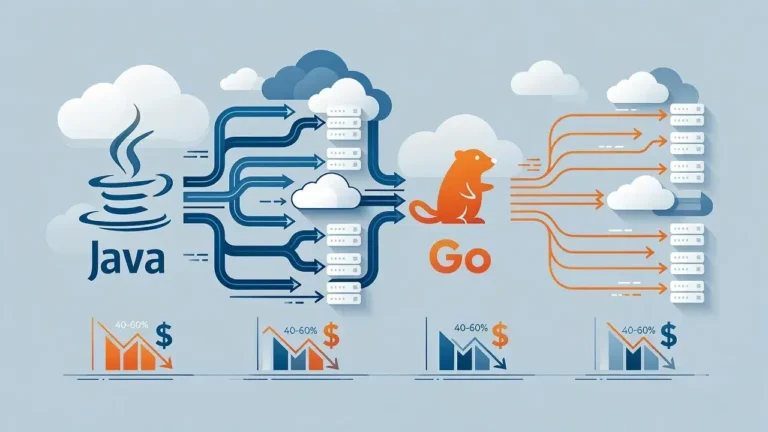
Migrating Java applications to serverless architecture involves navigating cold start challenges, rethinking application design patterns, managing memory allocation carefully, and adapting monitoring strategies to fit the stateless execution model inherent to serverless platforms.
I migrated 4 Java apps to serverless over the past year, expecting smooth transitions and immediate cost savings. Reality hit differently. Each migration exposed architectural assumptions I hadn't questioned and forced me to reconsider how Java applications should be built for cloud-native environments. The journey taught me lessons that textbooks rarely mention.
Cold starts became my biggest enemy

The first shock came when I noticed response times spiking unpredictably. Java's JVM initialization takes considerably longer than lightweight runtimes like Node.js or Python.
Cold starts happened whenever functions sat idle beyond the platform's threshold. Users experienced delays ranging from 3 to 8 seconds on initial requests. I tried several mitigation strategies, including keeping functions warm with scheduled pings, but this defeated the cost-saving purpose of serverless.
Strategies that actually worked
- Reducing JAR file sizes by removing unnecessary dependencies and using tools like ProGuard
- Switching to GraalVM native images for faster startup times
- Implementing lazy initialization patterns to defer non-critical component loading
- Using provisioned concurrency for critical endpoints despite added costs
The cold start problem forced me to reconsider which applications truly belonged in serverless environments. Not every Java app benefits from this architecture.
Memory allocation required constant tuning
Traditional Java applications run with generous heap sizes. Serverless functions operate under strict memory constraints that directly impact costs.
I initially allocated 512MB per function, thinking it would suffice. Garbage collection pauses caused timeouts under load. Increasing memory to 1024MB improved performance but doubled costs. Finding the sweet spot required extensive load testing and profiling.
The relationship between memory allocation and CPU power in serverless platforms surprised me. More memory meant proportionally more CPU, which reduced execution time. Sometimes paying for extra memory actually lowered overall costs by completing tasks faster.
Database connections needed complete rethinking

Connection pooling, a standard practice in traditional Java applications, became problematic in serverless contexts.
The connection pool dilemma
Each function instance maintained its own connection pool, leading to connection exhaustion at the database level. With hundreds of concurrent function executions, the database couldn't handle the connection volume.
- Implementing connection proxies like AWS RDS Proxy to manage connection pooling externally
- Reducing connection pool sizes to single connections per function instance
- Exploring serverless-friendly databases with HTTP-based APIs
- Adding connection retry logic with exponential backoff
This shift required rewriting data access layers and questioning decades-old Java persistence patterns. The stateless nature of serverless conflicts fundamentally with connection-oriented database designs.
Monitoring and debugging became more complex
Traditional application monitoring relies on persistent processes and centralized logging. Serverless scattered execution across ephemeral instances.
Stack traces became harder to interpret without context about which function instance generated them. Correlating logs across distributed function invocations required implementing structured logging with correlation IDs from the start.
I invested heavily in distributed tracing tools like AWS X-Ray and OpenTelemetry. These tools became essential rather than optional. Without them, diagnosing performance issues felt like searching for needles in haystacks.
Framework choices made huge differences
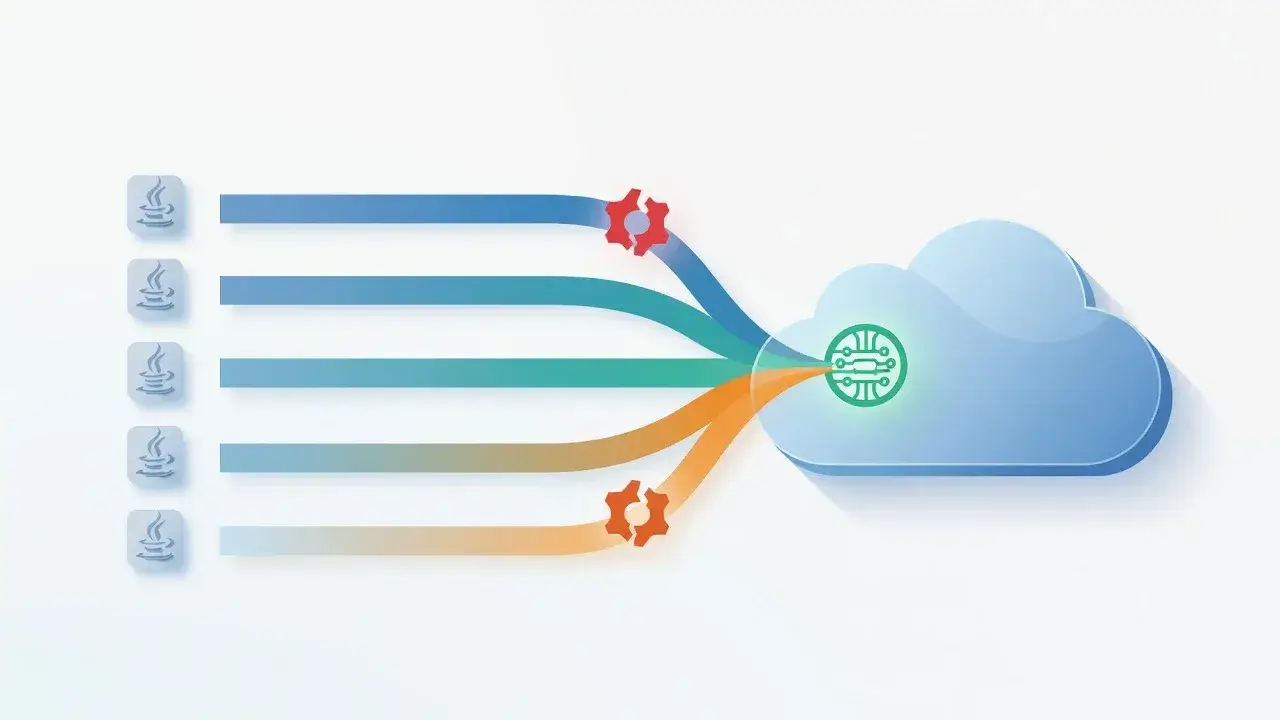
Spring Boot, my go-to Java framework, proved too heavy for serverless environments. Its comprehensive feature set came with initialization overhead that exacerbated cold start problems.
Lightweight alternatives
- Micronaut with ahead-of-time compilation reduced startup times significantly
- Quarkus native builds delivered near-instant startup with GraalVM
- Plain Java with minimal dependencies worked best for simple functions
Switching frameworks meant retraining teams and rewriting significant portions of applications. The decision to migrate existing Spring Boot applications versus rebuilding with serverless-optimized frameworks became a critical strategic choice.
Cost optimization required active management
The promise of paying only for actual usage sounded attractive. Reality proved more nuanced.
Inefficient code that ran acceptably on dedicated servers became expensive in serverless environments. A function that processed data inefficiently could cost more than the equivalent server-based deployment.
I implemented rigorous cost monitoring and set up alerts for anomalous spending patterns. Optimizing algorithms became directly tied to budget concerns. Functions that made redundant API calls or processed data inefficiently needed immediate refactoring.
The granular billing model made waste visible in ways traditional infrastructure never did. This transparency drove better coding practices across the team.
Team skills and mindset needed evolution
Technical challenges were only part of the migration story. The team's mental model of application architecture needed updating.
Developers accustomed to long-running processes struggled with stateless thinking. Debugging techniques that worked for monolithic applications didn't translate directly. The team needed training in distributed systems concepts, cloud-native patterns, and serverless-specific best practices.
Code review processes evolved to catch serverless anti-patterns early. We developed checklists covering cold start optimization, memory efficiency, and proper error handling for transient failures.
Serverless isn't a silver bullet
Migrating Java applications to serverless taught me that architecture decisions have consequences beyond initial implementation. The serverless model offers genuine benefits for specific use cases but demands careful consideration of trade-offs. Cold starts, memory management, database connectivity, and monitoring all require approaches different from traditional deployments. Success depends on choosing appropriate applications for migration, investing in proper tooling, and cultivating team expertise in cloud-native patterns. Not every Java application belongs in serverless, but those that fit can deliver impressive scalability and cost efficiency.