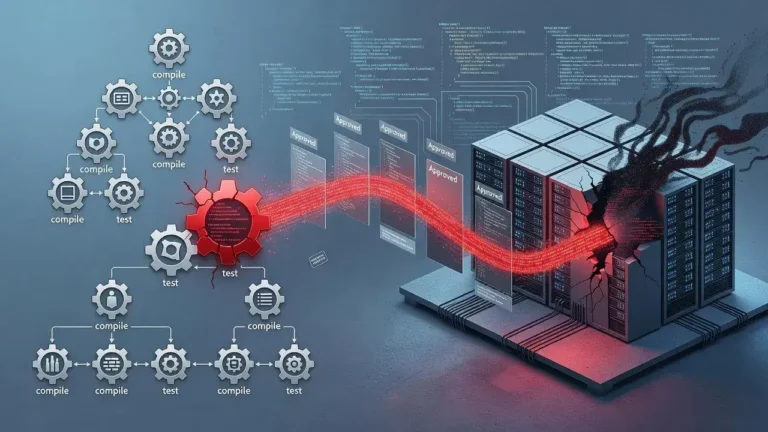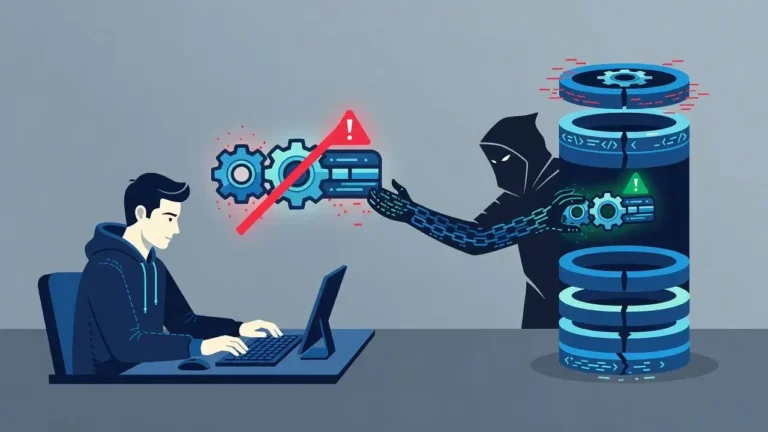
Deserialization attacks exploit Java's object reconstruction process by injecting malicious code into serialized data streams, allowing attackers to execute arbitrary commands and compromise entire applications within minutes through vulnerabilities in common libraries like Apache Commons Collections.
The deserialization attack that breaks Java apps in under 3 minutes represents one of the most dangerous security vulnerabilities in modern enterprise software. When Java applications convert serialized objects back into executable code, attackers can slip in malicious payloads that execute immediately upon reconstruction. This vulnerability has affected major corporations and remains a critical concern for development teams worldwide.
Understanding Java deserialization vulnerabilities
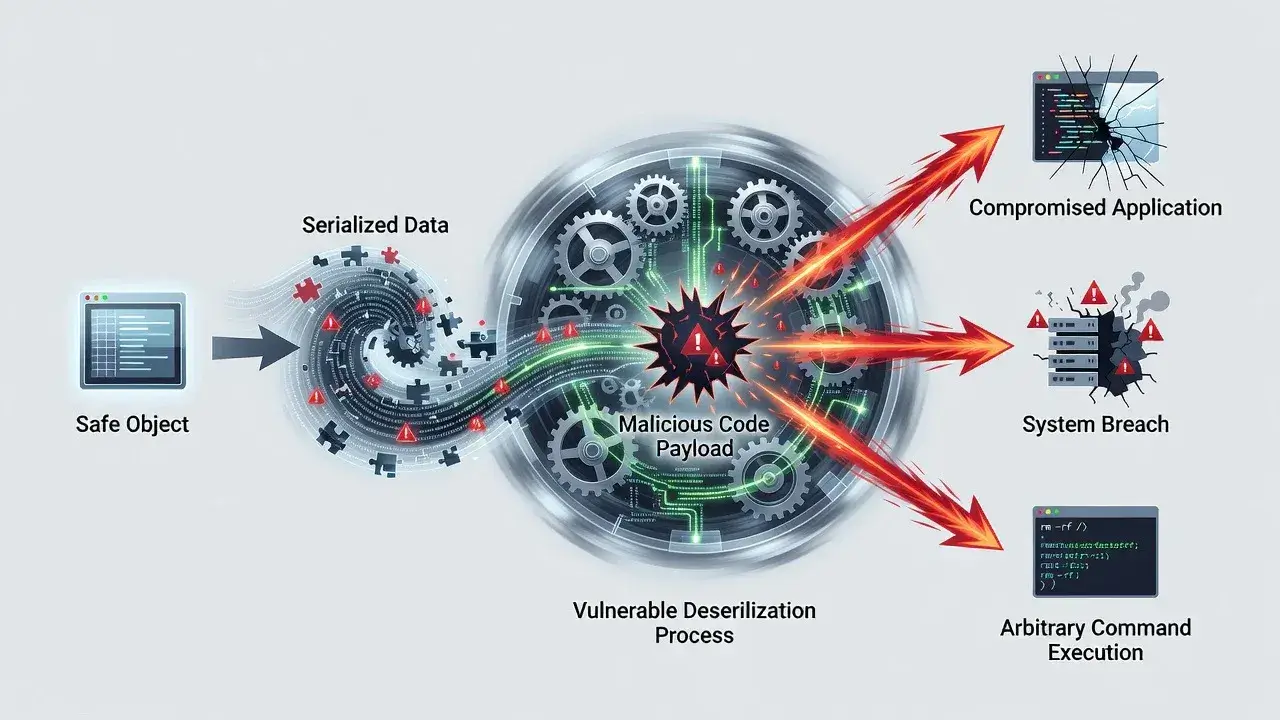
Java serialization converts objects into byte streams for storage or transmission. The reverse process, deserialization, reconstructs these objects from byte streams. The security problem emerges when applications deserialize untrusted data without proper validation.
How the attack mechanism works
Attackers craft malicious serialized objects containing harmful code. When the application deserializes this data, it automatically executes the embedded instructions. The process bypasses traditional security measures because the code runs during object reconstruction, not through standard input channels.
- Attackers identify applications using vulnerable serialization libraries
- Malicious payloads are constructed using gadget chains from existing classes
- The crafted object is sent to the target application through any input accepting serialized data
- Upon deserialization, the payload executes with application privileges
This attack vector proves particularly dangerous because it requires minimal interaction and can achieve remote code execution rapidly.
Common vulnerable libraries and frameworks
Several widely-used Java libraries contain classes that attackers exploit as gadget chains. These components weren't designed maliciously but their functionality can be chained together to execute arbitrary code.
Apache Commons Collections remains the most notorious example. Versions prior to 3.2.2 contained classes that, when combined properly, allowed complete system compromise. Spring Framework, Apache Struts, and JBoss also presented similar vulnerabilities in various versions.
Real-world exploitation examples
- Equifax breach in 2017 exploited Apache Struts deserialization flaws
- Jenkins automation servers faced widespread attacks through Java deserialization
- WebLogic servers became prime targets due to built-in deserialization endpoints
These incidents demonstrate how quickly attackers weaponize deserialization vulnerabilities once discovered.
The three-minute compromise timeline
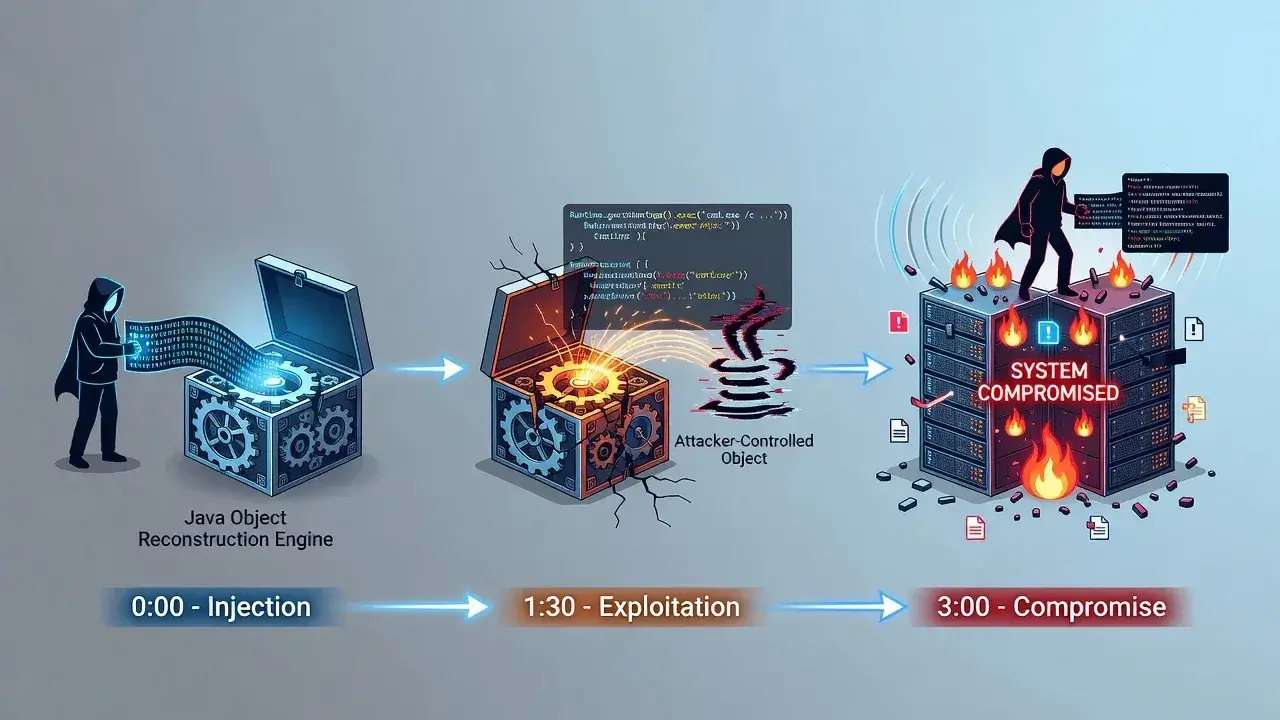
Security researchers have demonstrated that skilled attackers can compromise vulnerable Java applications in under three minutes using automated tools and pre-built exploit chains.
The first minute involves reconnaissance. Attackers scan for exposed endpoints that accept serialized data, often using automated tools like ysoserial. They identify the Java version and libraries in use through error messages or response headers.
During the second minute, attackers select appropriate gadget chains matching the target's library versions. Tools like ysoserial contain pre-built payloads for dozens of common libraries. They customize the payload with their desired commands, typically establishing reverse shells or downloading additional malware.
The final minute involves payload delivery and verification. The malicious serialized object is sent to the vulnerable endpoint. If successful, the attacker gains immediate code execution and can begin lateral movement through the network.
Detection and prevention strategies
Organizations must implement multiple defensive layers to protect against deserialization attacks. Prevention proves more effective than detection since successful exploitation happens instantly.
Input validation and filtering
Never deserialize data from untrusted sources without validation. Implement allowlists specifying which classes can be deserialized. Java 9 introduced deserialization filters that provide granular control over the deserialization process.
- Use ObjectInputFilter to restrict deserializable classes
- Implement custom deserialization logic with security checks
- Avoid native Java serialization for external communications
- Prefer JSON or XML with proper schema validation
Library management and updates
Maintain current versions of all Java libraries and frameworks. Security patches often address newly discovered gadget chains. Conduct regular dependency audits using tools like OWASP Dependency-Check to identify vulnerable components.
Organizations should establish processes for rapid patching when critical deserialization vulnerabilities are announced.
Alternative serialization approaches
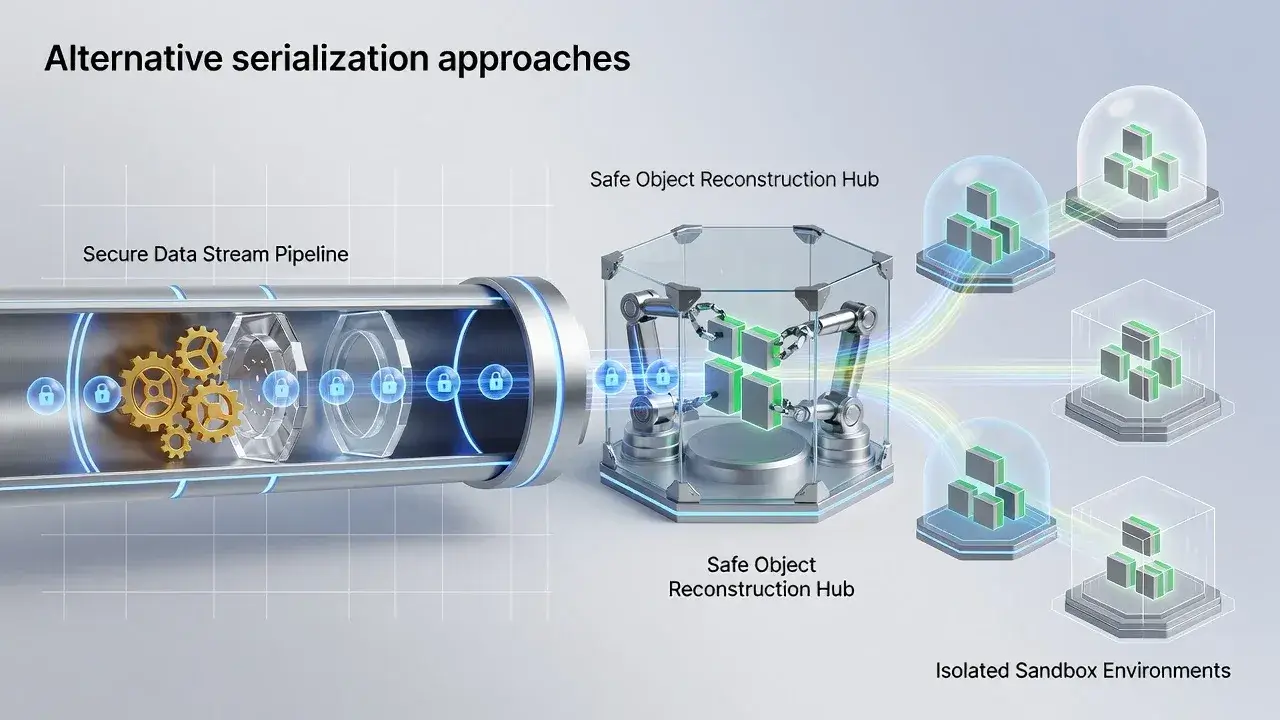
Moving away from native Java serialization eliminates entire classes of vulnerabilities. Modern applications increasingly adopt safer alternatives that don't execute code during deserialization.
JSON serialization libraries like Jackson and Gson provide type-safe object mapping without code execution risks. Protocol Buffers and Apache Avro offer efficient binary serialization with explicit schemas that prevent unexpected class loading.
These alternatives require more initial configuration but provide significantly stronger security guarantees. They separate data representation from code execution, removing the fundamental vulnerability that deserialization attacks exploit.
Monitoring and incident response
Despite preventive measures, organizations need detection capabilities for deserialization attacks. Network monitoring should flag unusual serialized data patterns, especially to unexpected endpoints.
Key monitoring indicators
- Unexpected ObjectInputStream usage in application logs
- Network traffic containing Java serialization magic bytes (AC ED 00 05)
- Sudden outbound connections from application servers
- Unusual process spawning from Java applications
Security teams should develop incident response playbooks specifically for deserialization attacks, including immediate isolation procedures and forensic analysis steps.
Conclusion
Deserialization attacks represent a critical threat to Java applications, capable of achieving complete system compromise in minutes. The combination of widespread vulnerable libraries, powerful exploit tools, and rapid exploitation timelines demands immediate attention from development and security teams. Organizations must prioritize eliminating native Java serialization from external interfaces, implementing strict input validation, and maintaining current library versions. By understanding the attack mechanics and adopting safer serialization alternatives, teams can effectively protect their applications from this dangerous vulnerability class.