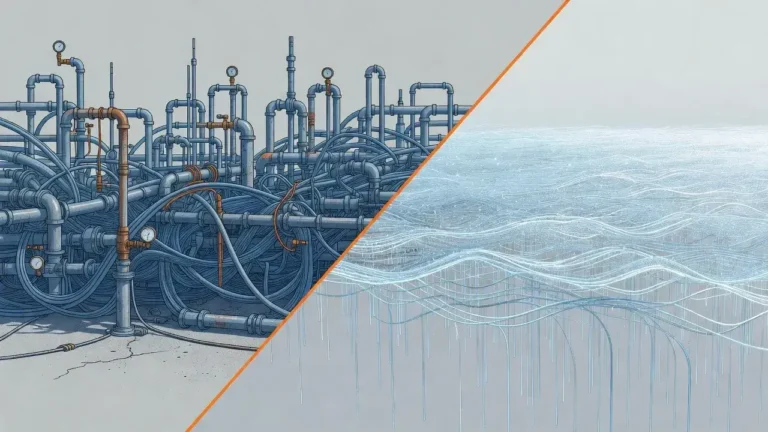
The hidden performance trap in JPA occurs when N+1 query problems emerge from lazy loading relationships, causing applications to execute hundreds of unnecessary database queries instead of a single optimized fetch, dramatically degrading response times and system throughput.
The hidden performance trap in JPA that slows down 80% of Java APIs remains one of the most overlooked issues in enterprise applications. Developers often discover this bottleneck only after deployment, when response times suddenly spike under real-world load. Understanding how JPA manages entity relationships can save countless hours of debugging and prevent serious production incidents.
What causes the N+1 query problem in JPA
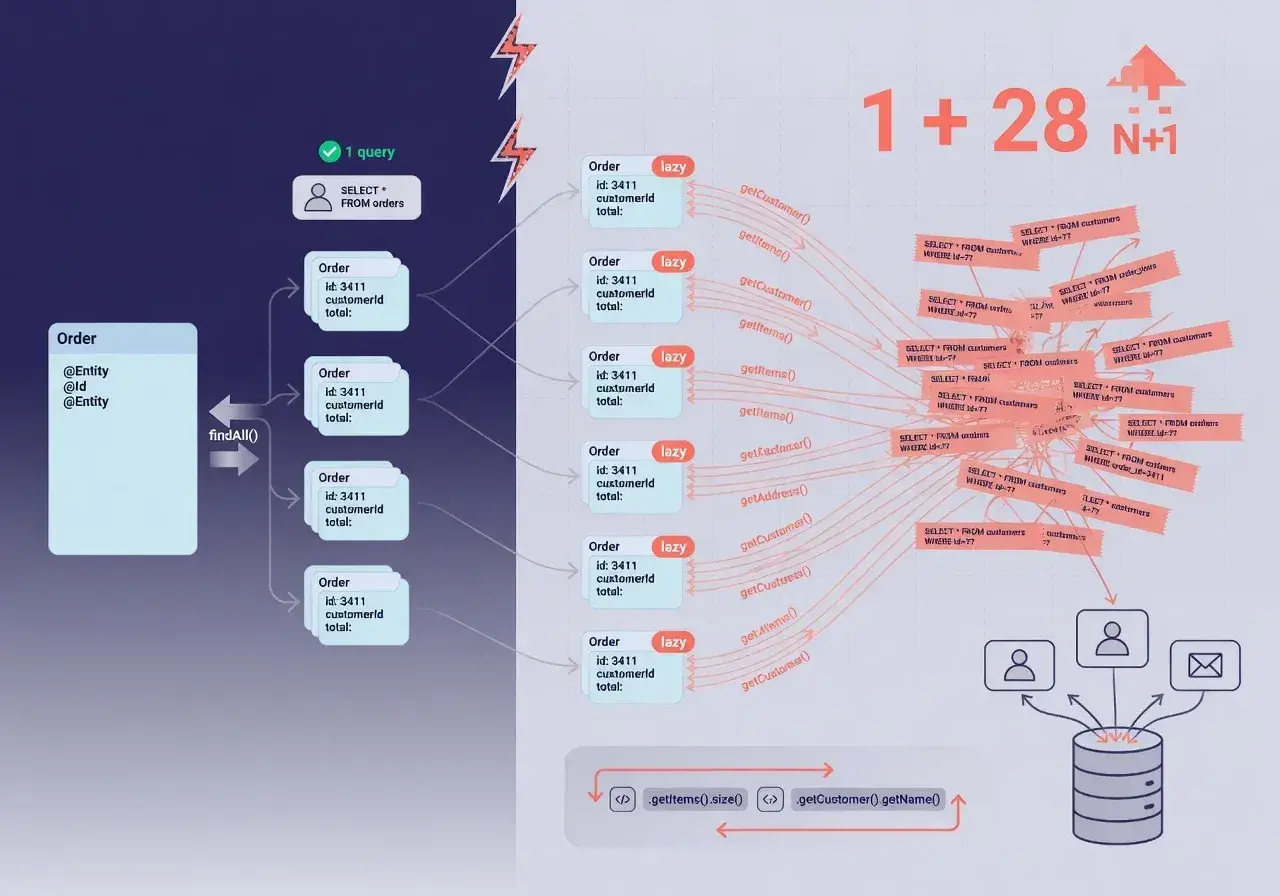
The root cause lies in how JPA handles lazy loading by default. When you fetch a parent entity, JPA doesn't automatically load its related child entities. Instead, it waits until you access those relationships in your code.
This approach seems efficient at first glance. However, when you iterate through a collection of parent entities and access their relationships, JPA fires a separate query for each parent. If you have 100 parent records, you'll execute 1 initial query plus 100 additional queries—hence the name N+1.
Common scenarios where this trap appears
- Loading users and their associated orders in REST API endpoints
- Fetching blog posts with their comments for list views
- Retrieving products with their categories in e-commerce applications
- Displaying departments with employee counts in dashboards
These situations create a cascade of database calls that overwhelm connection pools and increase latency. The problem becomes exponentially worse as your data volume grows, turning a fast application into an unresponsive system.
How to identify performance issues in your codebase
Detection requires careful monitoring and the right tools. Most developers miss this problem during development because test databases contain small datasets that mask the issue.
Enable query logging
Configure Hibernate to show all SQL statements by setting spring.jpa.show-sql=true in your application properties. This reveals exactly how many queries execute for each operation. You'll quickly spot patterns where dozens of similar queries run consecutively.
Use performance monitoring tools
- Hibernate Statistics provides detailed metrics about query execution
- Application Performance Monitoring solutions like New Relic or Datadog highlight slow transactions
- Database query analyzers show which statements consume the most resources
Regular profiling sessions help catch these issues before they reach production. Look for endpoints with response times that increase linearly with result set size—a clear indicator of N+1 problems.
Effective solutions using fetch strategies
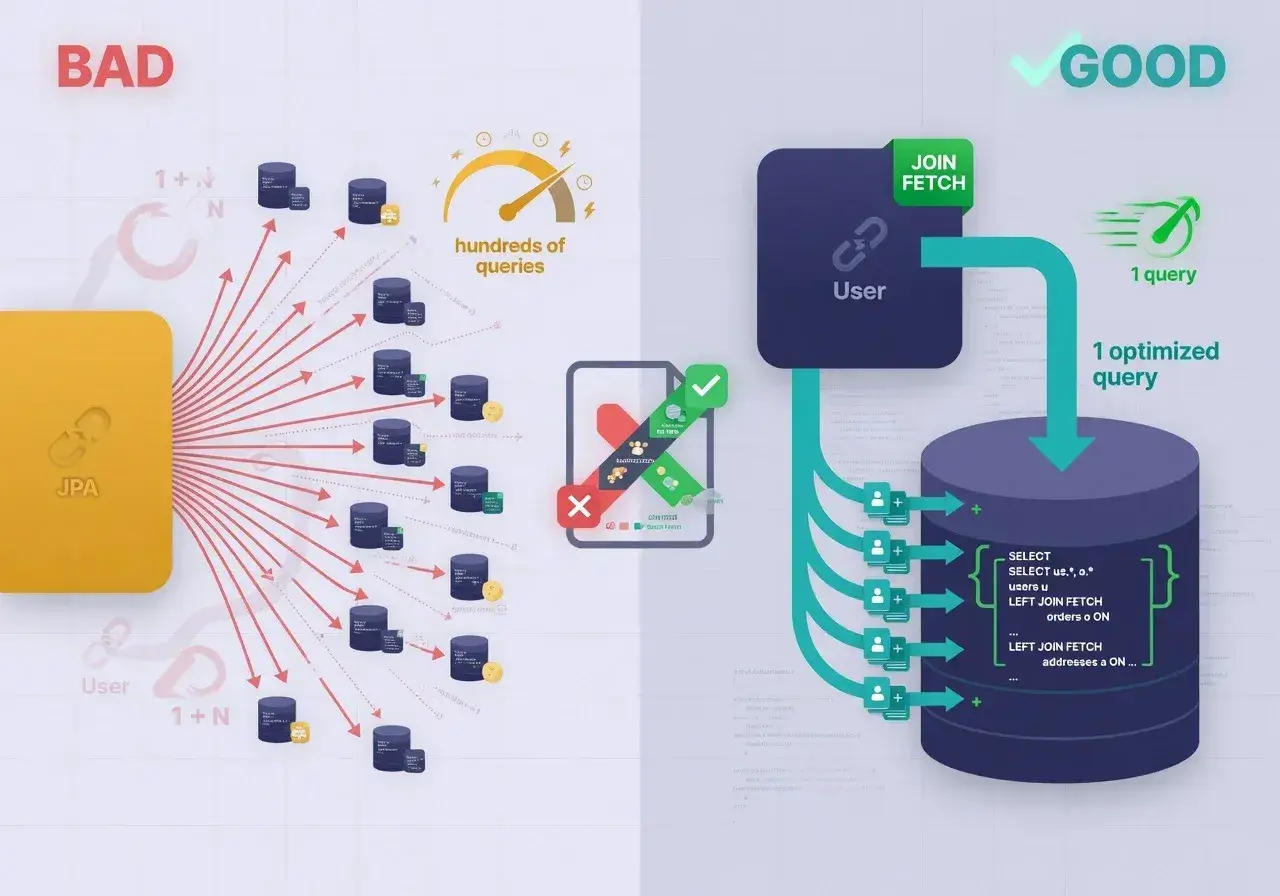
JPA offers several approaches to eliminate unnecessary queries. The key is loading related data in a single operation rather than multiple round trips.
The JOIN FETCH clause in JPQL forces eager loading for specific queries. Instead of writing a simple query, you explicitly tell JPA to retrieve related entities: "SELECT u FROM User u JOIN FETCH u.orders". This generates a single SQL statement with proper joins.
Entity graph annotations
For more complex scenarios, entity graphs provide fine-grained control over fetch behavior. You define named graphs at the entity level, specifying which relationships to load eagerly. Then reference these graphs in repository methods using the @EntityGraph annotation.
- Named entity graphs keep fetch logic separate from query definitions
- Dynamic entity graphs allow runtime customization of loading behavior
- Subgraphs handle nested relationships efficiently
These techniques give you flexibility without sacrificing performance. You can create different loading strategies for different use cases, optimizing each endpoint individually.
Batch fetching as an alternative approach
When JOIN FETCH isn't practical, batch fetching provides a middle ground. Instead of one query per entity, JPA groups multiple fetches into a single statement.
Configure batch size using the @BatchSize annotation on your entity relationships. Hibernate then loads related entities in batches, reducing total query count significantly. A batch size of 10 transforms 100 queries into just 11—one initial query plus 10 batch fetches.
This approach works particularly well for scenarios where you can't predict which relationships users will access. The performance improvement is substantial while maintaining lazy loading benefits for unused associations.
Projection queries for read-only operations
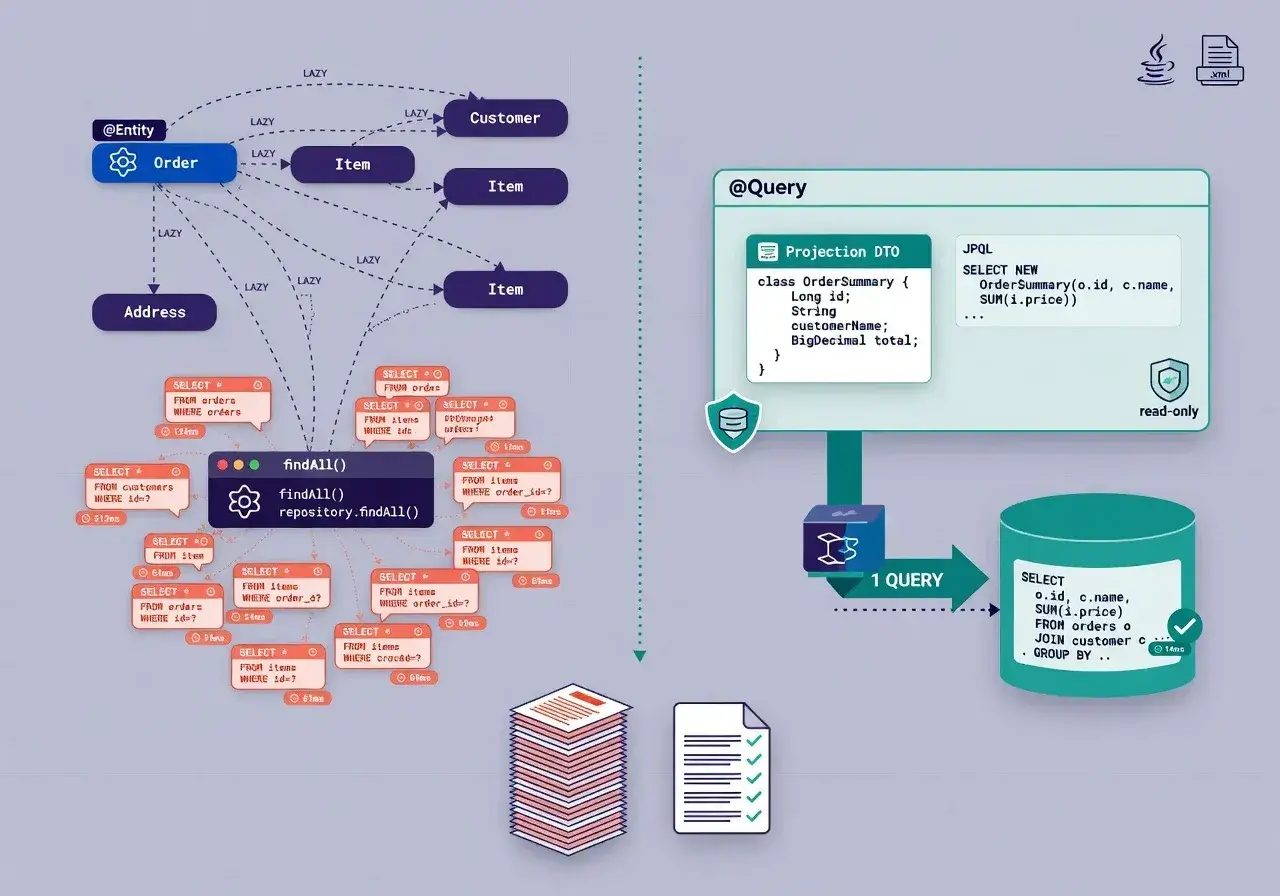
Sometimes you don't need full entities at all. Projection queries fetch only the specific fields required for a particular view, reducing both query complexity and memory consumption.
DTO projections with constructor expressions
JPQL supports constructor expressions that map query results directly to custom classes. You define a DTO with only the fields you need, then use "SELECT new com.example.UserDTO(u.name, u.email) FROM User u". This bypasses entity management overhead entirely.
- Interface-based projections offer even simpler syntax for basic cases
- Spring Data JPA generates implementations automatically from method signatures
- Projection queries execute faster and consume less memory than full entity loads
For read-heavy operations like reporting or list views, projections often provide the best performance characteristics. They eliminate the N+1 problem by design since you're not loading entity relationships at all.
Caching strategies to reduce database load
Even optimized queries benefit from caching. JPA's second-level cache stores entity data across sessions, preventing repeated database access for frequently requested information.
Configure providers like EhCache or Hazelcast to cache entities and query results. Mark cacheable entities with @Cacheable and define cache regions for different data types. Hot data stays in memory while cold data hits the database only when necessary.
Query result caching complements entity caching by storing the results of specific JPQL queries. This works exceptionally well for reference data that changes infrequently, like country lists or product categories.
Building faster JPA applications
Avoiding the N+1 query trap requires awareness and proactive optimization. By understanding how JPA loads relationships, enabling proper monitoring, and applying appropriate fetch strategies, you can build APIs that scale efficiently. The techniques covered here—from JOIN FETCH to projections and caching—provide a comprehensive toolkit for eliminating performance bottlenecks. Regular profiling and query analysis ensure your application maintains optimal performance as it grows, preventing the hidden traps that plague so many Java APIs in production environments.