Quarkus fundamentally transforms Java serverless development by offering sub-second startup times and minimal memory footprint, making Java finally competitive with languages traditionally favored for cloud functions.
How Quarkus changed the way I think about Java for serverless functions became clear the first time I deployed a function that started in 0.014 seconds. For years, Java carried a reputation as too heavy for serverless architectures, where cold start times directly impact user experience and cloud costs. Quarkus shattered that perception completely.
The traditional Java serverless problem
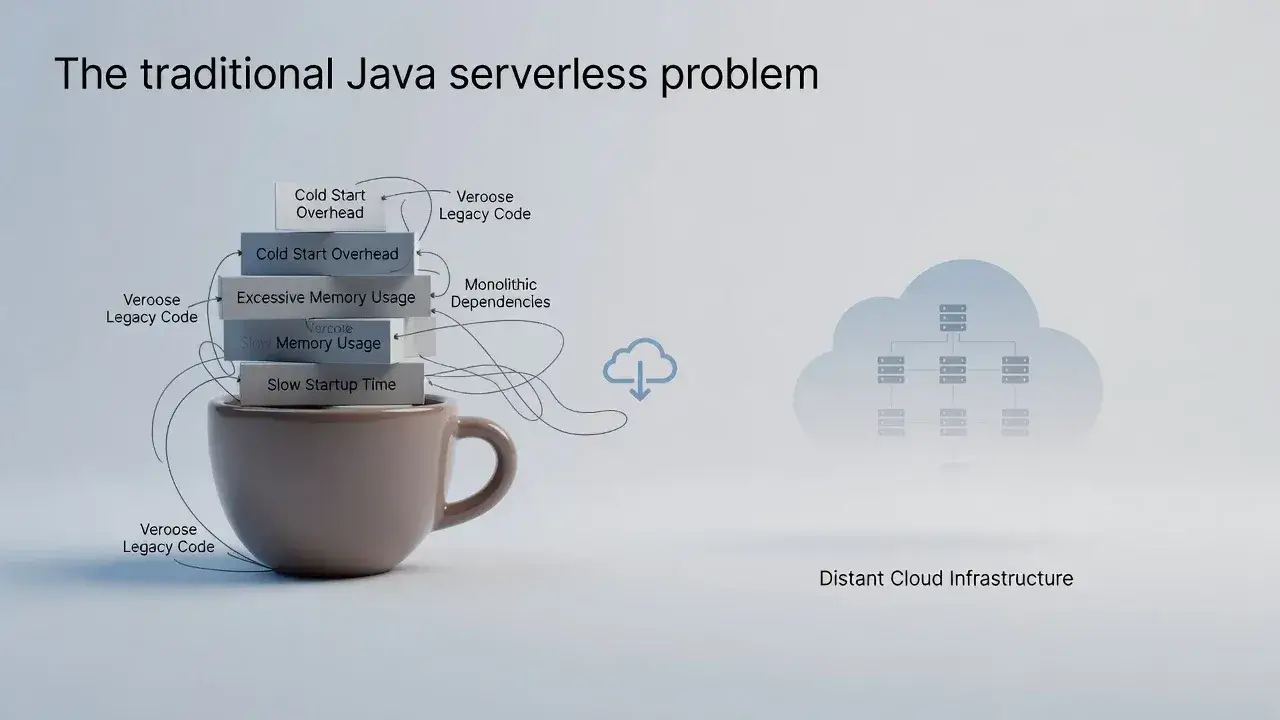
Java applications historically struggled in serverless environments due to their startup characteristics. The JVM initialization process, class loading, and framework bootstrapping created cold starts measuring in seconds rather than milliseconds.
Traditional frameworks like Spring Boot, while excellent for long-running applications, weren't optimized for the ephemeral nature of serverless functions. Each invocation after an idle period meant waiting for the entire runtime to initialize, frustrating users and consuming billable time.
Cloud providers began favoring Node.js, Python, and Go for serverless workloads. These languages offered near-instantaneous cold starts, making them the default choice for AWS Lambda, Azure Functions, and Google Cloud Functions.
What makes Quarkus different
Quarkus approaches Java development with a container-first philosophy, fundamentally redesigning how the framework operates.
Build-time optimization
The framework performs extensive work during build time rather than runtime. Metadata processing, classpath scanning, and configuration parsing happen before deployment, dramatically reducing startup overhead.
- Ahead-of-time compilation eliminates JIT warmup delays
- Dead code elimination removes unused framework components
- Native image compilation with GraalVM produces standalone executables
- Memory consumption drops from hundreds of megabytes to tens
Developer experience preservation
Despite these optimizations, Quarkus maintains the developer experience Java developers expect. You still write standard JAX-RS endpoints, use CDI for dependency injection, and leverage familiar libraries.
The framework supports live coding with instant reload, making development cycles as fast as scripting languages while maintaining Java's type safety and tooling advantages.
Real-world serverless performance gains
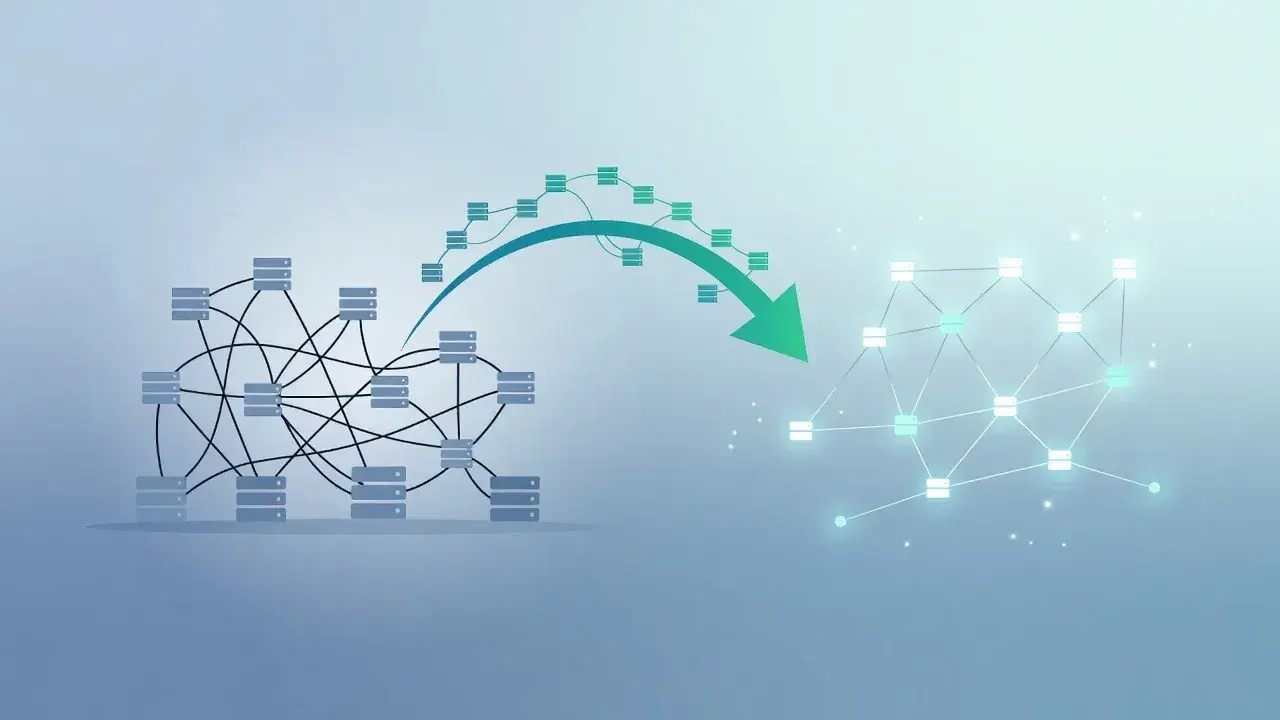
The performance improvements aren't theoretical. In production serverless deployments, Quarkus applications demonstrate measurable advantages.
A typical REST API function built with traditional frameworks might cold start in 3-5 seconds. The same function in Quarkus JVM mode starts in 0.3-0.5 seconds. Compiled to native with GraalVM, that drops to 0.01-0.05 seconds.
Memory usage follows similar patterns. Where a Spring Boot function might require 512MB of memory allocation, Quarkus JVM mode runs comfortably in 128MB, and native mode in 32-64MB. These reductions directly translate to cost savings in pay-per-use serverless pricing models.
Practical implementation considerations
Adopting Quarkus for serverless functions requires understanding both its strengths and limitations.
Extension ecosystem
Quarkus provides extensions for common serverless needs including AWS Lambda, Azure Functions, and Google Cloud Functions. These extensions handle the platform-specific integration details automatically.
- Database connectivity through reactive and traditional JDBC
- Message queue integration with Kafka and messaging systems
- Authentication and authorization frameworks
- Observability through metrics and distributed tracing
The extension model ensures only required dependencies get included, maintaining the minimal footprint essential for serverless efficiency.
Native compilation trade-offs
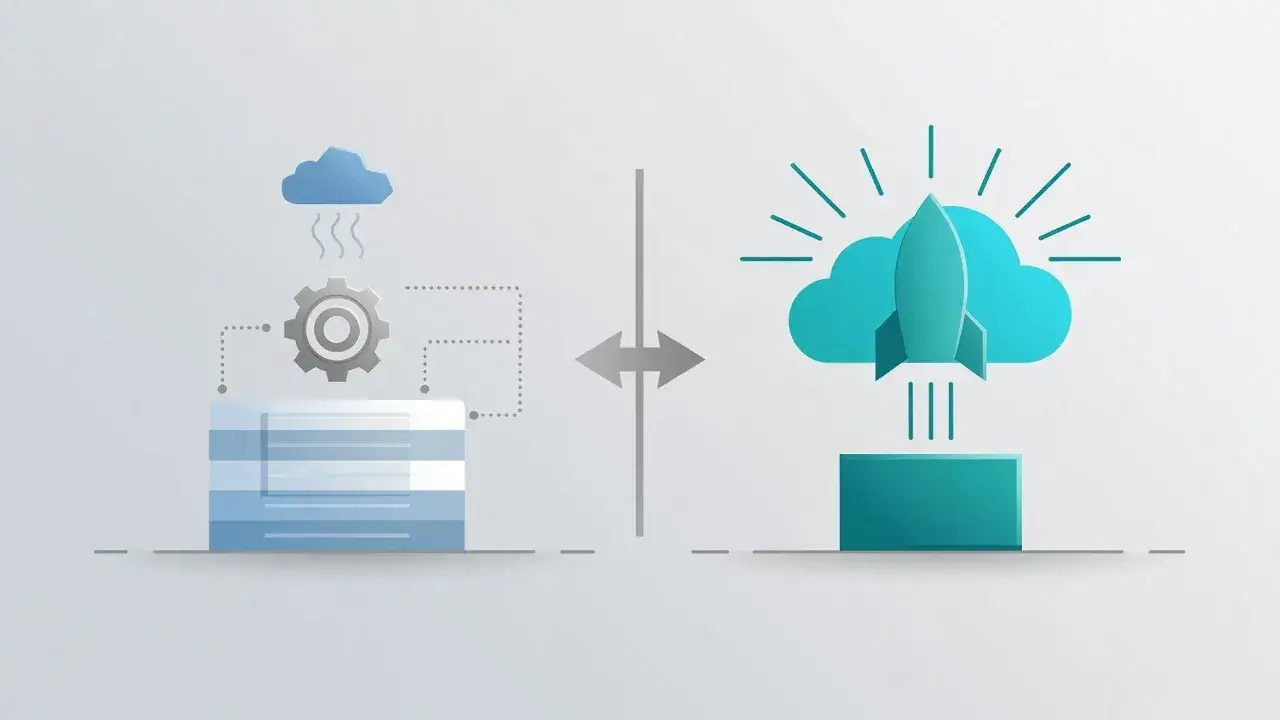
While native compilation offers the best performance, it introduces constraints developers must understand.
Reflection-heavy code requires configuration files telling GraalVM which classes need reflection support. Dynamic class loading and certain Java features have limited support in native mode. Build times increase significantly compared to standard JAR compilation.
For many serverless scenarios, JVM mode provides sufficient performance without these constraints. The decision between JVM and native mode depends on specific cold start requirements and application characteristics.
Cost implications for serverless architectures
The efficiency improvements create tangible financial benefits in serverless deployments.
Faster cold starts mean better user experience and reduced billable execution time. Lower memory requirements allow smaller function configurations, directly reducing per-invocation costs across millions of executions.
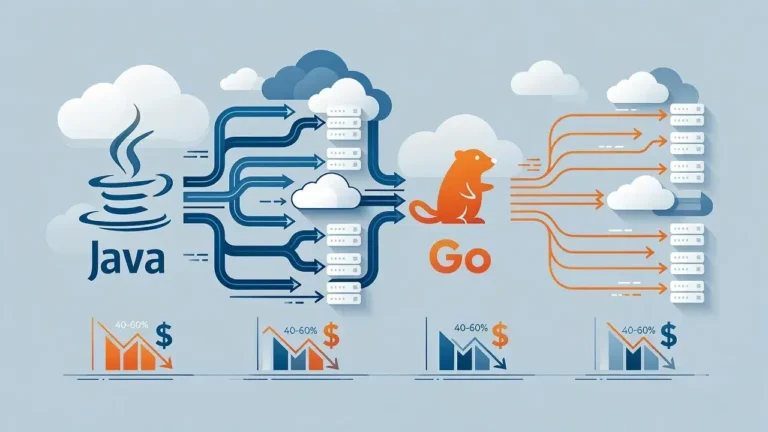
For applications with unpredictable traffic patterns, where functions frequently scale to zero, these savings compound significantly. Organizations report 40-60% cost reductions migrating serverless functions from traditional frameworks to Quarkus.
Changing development mindset
Beyond technical benefits, Quarkus shifts how developers approach Java architecture decisions.
Java becomes viable for use cases previously reserved for other languages. Microservices can be genuinely micro, running efficiently in constrained environments. The assumption that Java requires substantial resources no longer holds true.
This opens architectural possibilities combining Java's ecosystem maturity with serverless scalability. Teams can maintain language consistency across services while optimizing for cloud-native deployment patterns.
Java serverless renaissance
Quarkus fundamentally challenges the notion that Java isn't suitable for serverless computing. By addressing the core issues of startup time and memory consumption, it positions Java as a competitive choice for modern cloud functions. The framework proves that with proper optimization, Java's strengths in type safety, tooling, and ecosystem can coexist with serverless efficiency requirements, opening new possibilities for developers who prefer Java's development experience.