
A single misconfigured Maven dependency can silently introduce malicious code into production environments, bypassing security reviews and creating exploitable vulnerabilities that compromise entire systems through the software supply chain.
How one misconfigured Maven dependency opened a backdoor in production code represents one of the most insidious threats facing development teams today. A seemingly harmless configuration error in your project's pom.xml file can pull in compromised libraries, injecting malicious code that operates undetected within your application. This isn't theoretical—real incidents have demonstrated how attackers exploit dependency confusion and typosquatting to infiltrate production systems.
Understanding Maven dependency resolution vulnerabilities
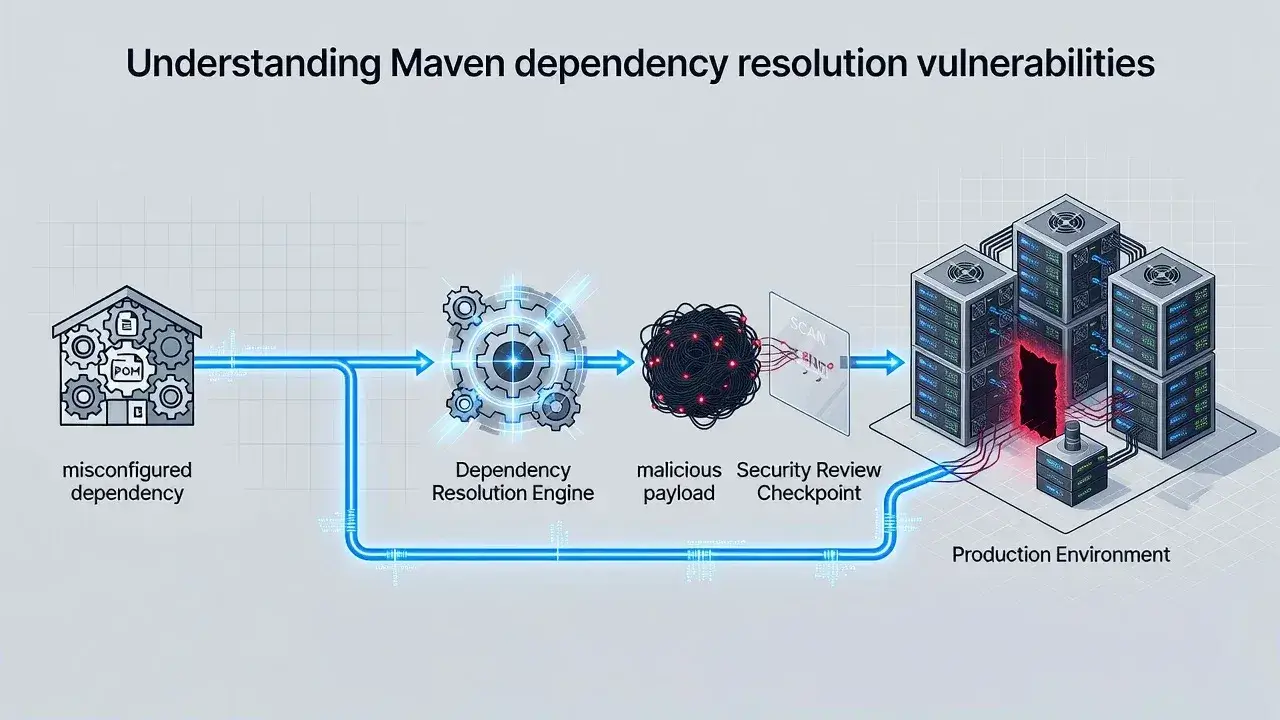
Maven's dependency resolution mechanism follows a specific order when searching for artifacts across multiple repositories. When developers misconfigure repository priorities or fail to specify exact versions, the build system becomes vulnerable to dependency confusion attacks.
How repository poisoning works
Attackers exploit the order in which Maven checks repositories by uploading malicious packages with identical names to public repositories. If your configuration checks public repos before private ones, the compromised version gets downloaded instead of your legitimate internal library.
- Maven Central and other public repositories allow anyone to publish artifacts with available namespace identifiers
- Internal company packages often use simple naming conventions without proper namespace protection
- Version resolution rules can prioritize newer malicious versions over intended stable releases
- Transitive dependencies create hidden attack vectors that bypass direct dependency reviews
The resolution process becomes particularly dangerous when developers use version ranges or SNAPSHOT dependencies, which automatically pull the latest available version without explicit verification. This automation, designed for convenience, transforms into a security liability.
Real-world backdoor injection scenarios
Several documented cases illustrate how misconfigured dependencies have introduced backdoors into production code. These incidents share common patterns that development teams must recognize.
In one notable case, a financial services company discovered that their internal artifact name matched a typosquatted package in Maven Central. For three months, their CI/CD pipeline had been pulling the malicious version, which contained data exfiltration code that transmitted sensitive customer information to external servers. The backdoor remained undetected because it activated only in production environments, avoiding detection during testing phases.
Common misconfiguration patterns
- Missing or incorrect repository order specifications in settings.xml files
- Overly permissive version range declarations that accept any matching version
- Absence of checksum verification for downloaded artifacts
- Disabled SSL certificate validation for repository connections
These misconfigurations create opportunities for attackers to substitute legitimate dependencies with compromised versions containing embedded backdoors, keyloggers, or remote access trojans.
The anatomy of a dependency confusion attack
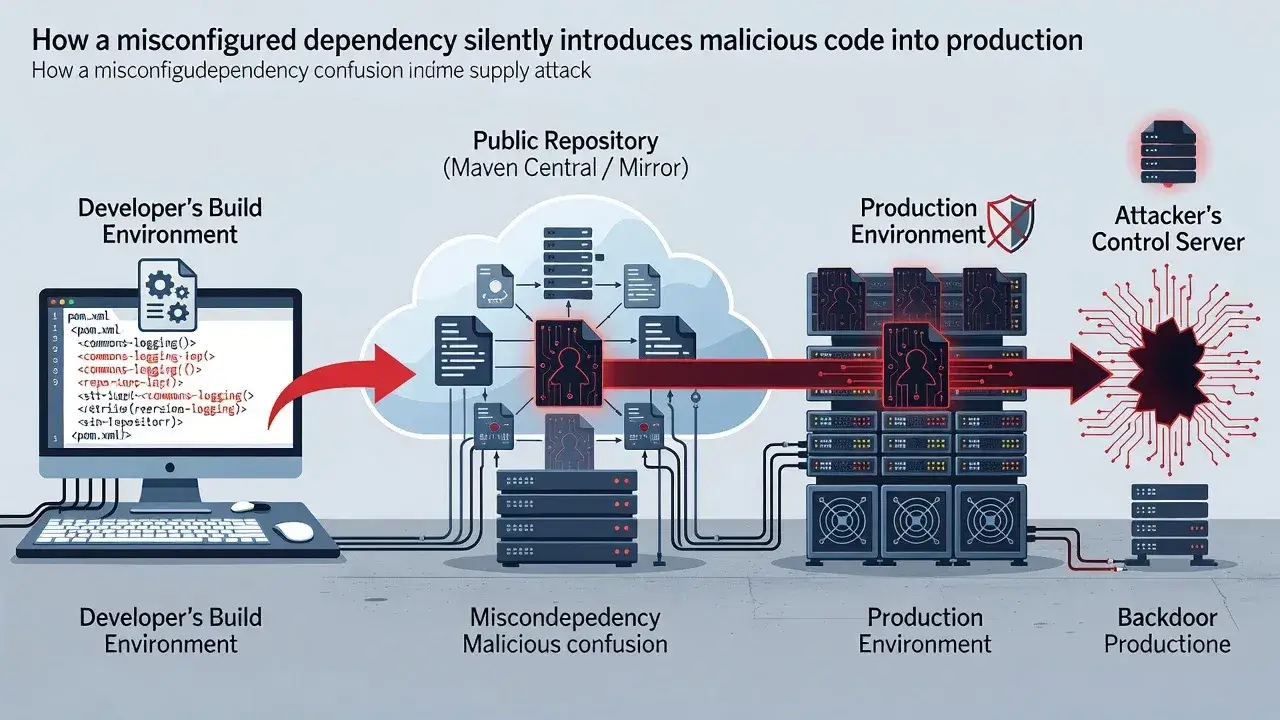
Dependency confusion attacks exploit the trust relationship between internal and external package repositories. Understanding the attack mechanics helps teams implement effective defenses.
Attackers first identify target organizations by analyzing public job postings, GitHub repositories, or leaked configuration files that reveal internal package names. They then register these names in public repositories with higher version numbers, ensuring Maven's version resolution logic selects their malicious package.
The malicious code typically includes several layers of obfuscation to avoid detection during code reviews. Initial payloads often establish command-and-control channels that enable attackers to deploy additional exploits after gaining initial access. Some sophisticated attacks use time-delayed activation or environment detection to ensure the backdoor only executes in production systems.
Critical pom.xml security configurations
Your project's pom.xml file serves as the primary defense against dependency-based attacks. Proper configuration requires explicit control over repository access and version management.
Repository priority and access control
Always define repository order explicitly, placing trusted internal repositories before public ones. Use repository manager proxies like Nexus or Artifactory to create a controlled gateway that filters and caches external dependencies.
- Explicitly declare all repositories with specific URLs and access credentials
- Disable automatic repository discovery and plugin repository inheritance
- Implement repository whitelisting that blocks unexpected sources
- Use mirror configurations to enforce single-point dependency acquisition
Version specifications should avoid wildcards and ranges. Pin exact versions for all direct dependencies and periodically audit transitive dependencies to ensure no unexpected packages have infiltrated your dependency tree.
Detection and prevention strategies
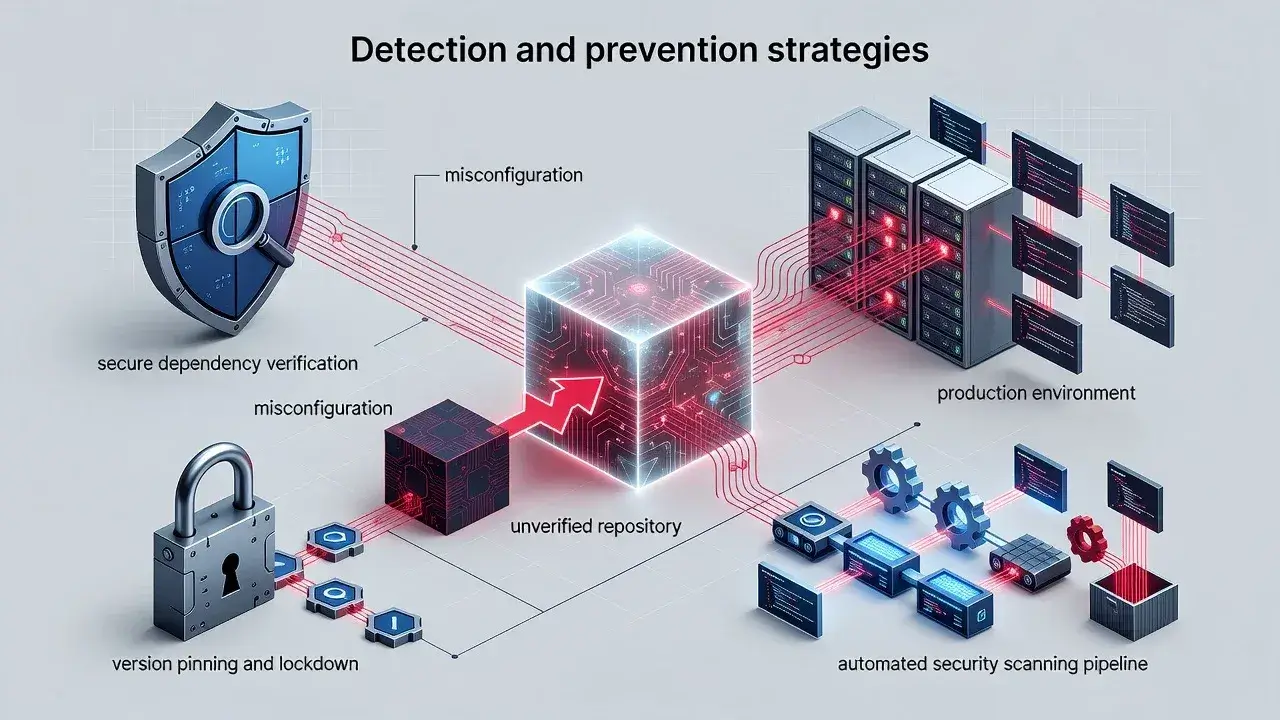
Identifying compromised dependencies requires multiple layers of scanning and verification throughout the development lifecycle.
Implement dependency scanning tools that check against known vulnerability databases and detect suspicious package characteristics. Tools like OWASP Dependency-Check, Snyk, or GitHub's Dependabot provide automated scanning that integrates into CI/CD pipelines.
Verification and monitoring practices
- Enable checksum verification for all downloaded artifacts using SHA-256 or stronger algorithms
- Maintain a software bill of materials (SBOM) that documents every dependency version in production
- Monitor for unexpected network connections or file system access during build processes
- Implement runtime application self-protection (RASP) to detect anomalous behavior from dependencies
Regular dependency audits should compare your declared dependencies against what's actually being resolved and downloaded. Discrepancies often indicate configuration issues or active attacks.
Building a secure dependency management workflow
Long-term security requires establishing organizational practices that prevent misconfiguration and detect compromises early.
Create a centralized dependency management strategy using parent POMs that enforce security policies across all projects. Establish approval processes for adding new dependencies, requiring security reviews before packages enter your approved list.
Use private repository managers as mandatory proxies for all external dependencies. This creates a chokepoint where security teams can scan, verify, and cache approved versions while blocking unauthorized packages. Configure your Maven settings to exclusively use these internal repositories, preventing direct access to public sources.
Implement continuous monitoring that alerts teams when new versions of dependencies appear or when build processes attempt to access unexpected repositories. These signals often indicate either legitimate updates requiring review or potential security incidents requiring immediate investigation.
Protecting your supply chain
Maven dependency misconfigurations represent a critical vulnerability in modern software supply chains, enabling attackers to inject backdoors directly into production code. By understanding resolution mechanics, implementing strict configuration controls, and maintaining continuous verification processes, development teams can significantly reduce their exposure to these sophisticated attacks. Security isn't just about the code you write—it's equally about ensuring the code you import remains trustworthy throughout your application's lifecycle.