
Senior Java developers consistently identify a critical gap between coding proficiency and architectural decision-making, where early backend design choices create technical debt that haunts projects for years, making strategic planning and pattern selection essential from day one.
What senior Java developers wish they knew before architecting their first backend represents a journey from writing functional code to designing systems that scale, maintain, and evolve gracefully. Many talented developers discover too late that architectural decisions made during initial development phases determine project success far more than coding skills alone. Understanding these lessons early transforms how you approach system design, saving countless hours of refactoring and preventing costly mistakes that compound over time.
Understanding the difference between coding and architecture
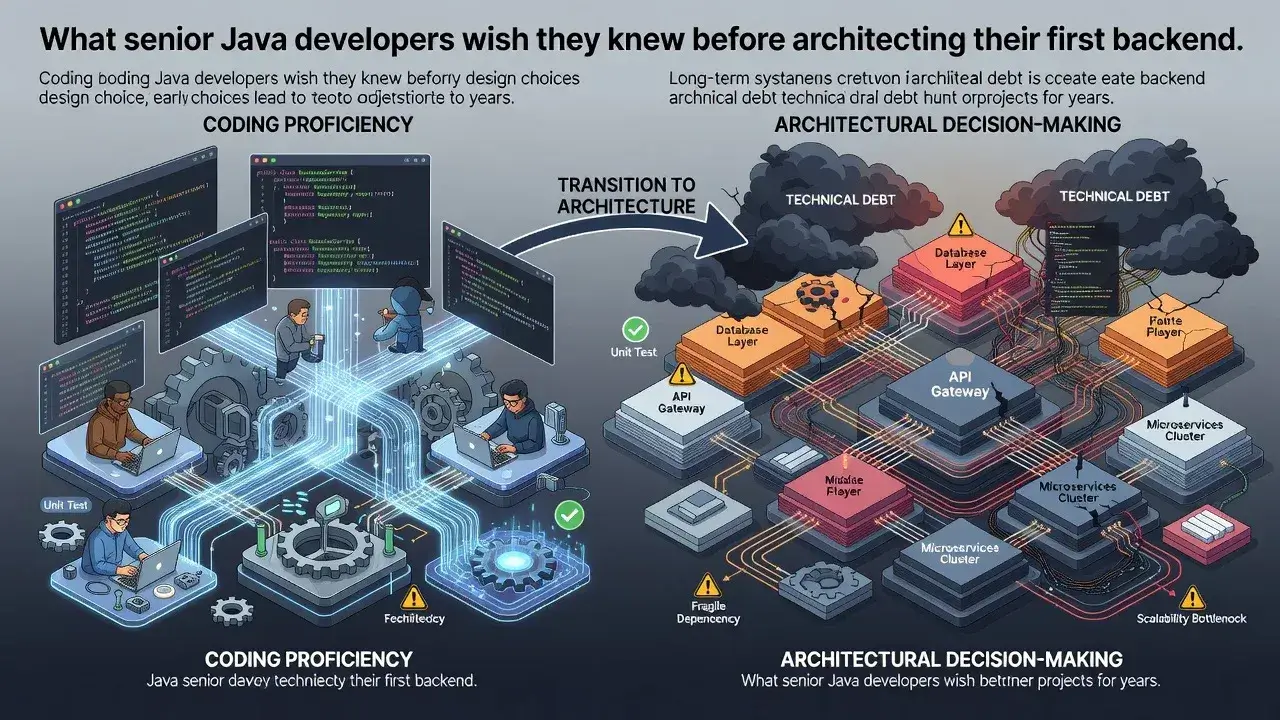
Writing clean Java code differs fundamentally from designing robust backend systems. Developers often conflate these skills, assuming proficiency in one guarantees success in the other.
The architectural mindset shift
Architecture demands thinking beyond immediate functionality. You must consider scalability, maintainability, and future requirements that may not exist today. This perspective requires evaluating trade-offs between different approaches rather than seeking perfect solutions.
- Anticipating growth patterns and traffic increases without over-engineering
- Balancing technical debt against delivery timelines strategically
- Recognizing when simplicity outweighs sophisticated patterns
- Understanding that premature optimization creates more problems than it solves
Architectural thinking emphasizes long-term consequences of design decisions, requiring developers to project how systems evolve as business requirements change and user bases expand.
Domain-driven design principles matter more than frameworks
Many developers focus extensively on mastering Spring Boot, Hibernate, or microservices frameworks while neglecting fundamental domain modeling principles that determine system coherence.
Domain-driven design provides vocabulary and patterns for organizing business logic effectively. Understanding bounded contexts, aggregates, and entities creates natural system boundaries that frameworks merely implement. Developers who prioritize framework features over domain modeling often build technically impressive systems that fail to represent business processes accurately.
Investing time in understanding your business domain pays dividends that transcend any specific technology choice. Frameworks change, but well-modeled domains remain stable and adaptable.
Database schema design determines system flexibility
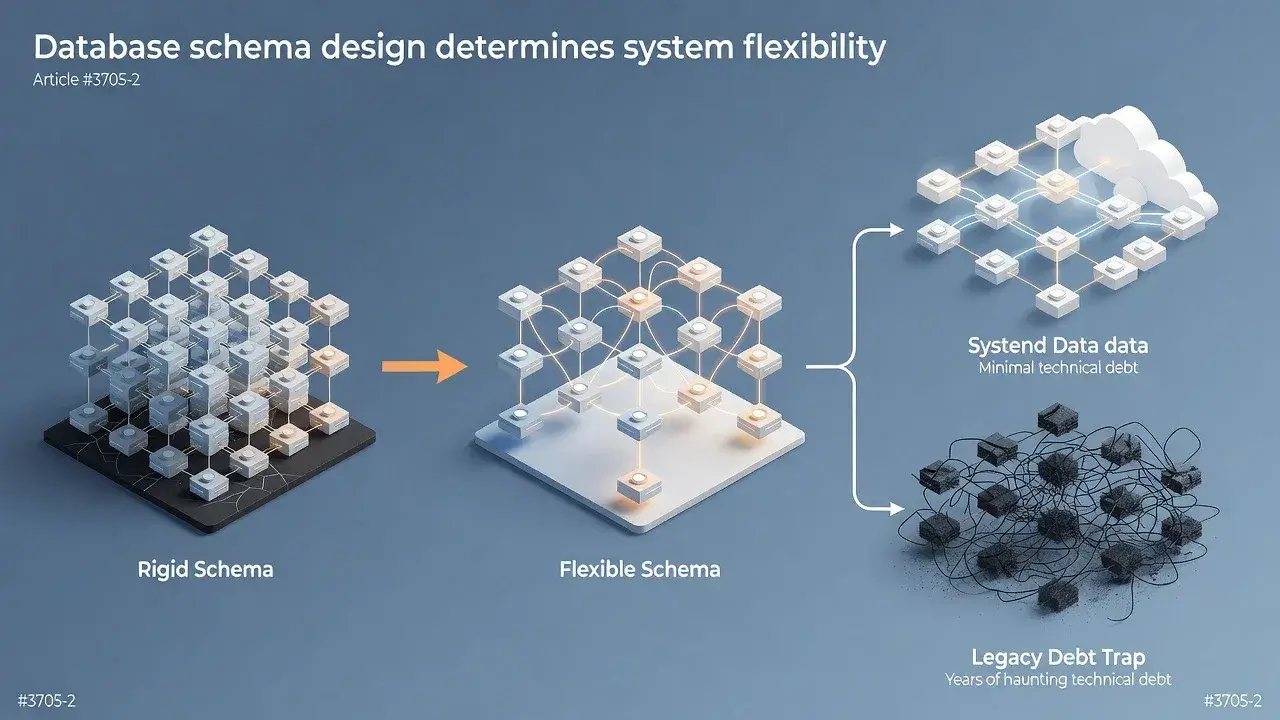
Backend architecture lives or dies by database design decisions. Schema choices made hastily during initial development create constraints that become increasingly expensive to modify.
Critical schema considerations
- Normalization levels appropriate for your use case and query patterns
- Indexing strategies that balance read performance against write overhead
- Data type selections that accommodate future requirements without migrations
- Relationship modeling that reflects actual business entity interactions
Experienced architects recognize that database schemas represent contracts with your application code. Breaking these contracts through poorly planned changes cascades through multiple system layers, requiring coordinated updates across services, APIs, and client applications.
API design requires careful versioning strategy
APIs form contracts between your backend and consumers. Breaking these contracts damages trust and creates integration nightmares for partners and internal teams alike.
Versioning strategies should be established before launching your first endpoint. Whether you choose URL versioning, header-based versioning, or content negotiation, consistency matters more than the specific approach selected. Developers often add endpoints reactively without considering backward compatibility until breaking changes force painful migrations.
Planning for API evolution from the beginning enables graceful deprecation paths and smooth transitions as your system matures.
Monitoring and observability are architectural concerns

Many developers treat logging and monitoring as operational afterthoughts rather than architectural requirements. This perspective leads to systems that are difficult to debug and impossible to optimize effectively.
Building observable systems
Observability must be designed into your architecture from the beginning. Structured logging, distributed tracing, and metrics collection require infrastructure decisions that become difficult to retrofit later.
- Implementing correlation IDs that track requests across service boundaries
- Establishing logging standards that balance detail against storage costs
- Creating dashboards that surface actionable insights rather than raw data
Systems designed with observability in mind enable teams to diagnose issues quickly, understand user behavior patterns, and make data-driven optimization decisions confidently.
Security cannot be added later as a feature
Security represents fundamental architectural requirements rather than features you can append after building core functionality. Authentication, authorization, data encryption, and input validation must be integrated into your design from the beginning.
Developers often underestimate the complexity of implementing robust security models. Role-based access control, OAuth flows, and secure token management require careful planning and consistent implementation across all system components. Retrofitting security into existing systems frequently exposes design assumptions that conflict with security best practices.
Treating security as an architectural pillar rather than a compliance checkbox protects your users and simplifies future security enhancements.
Testing strategy shapes architectural decisions
Your testing approach influences how you structure code, define interfaces, and organize dependencies. Architectures that prioritize testability tend toward cleaner separation of concerns and more maintainable codebases.
Understanding the testing pyramid helps balance unit tests, integration tests, and end-to-end tests appropriately. Over-reliance on any single testing layer creates brittle test suites that either miss critical bugs or require excessive maintenance effort. Designing with testability in mind means favoring dependency injection, avoiding static methods, and creating clear boundaries between components.
Testable architectures enable confident refactoring and rapid feature development without fear of breaking existing functionality.
Learning architecture through experience and preparation
Backend architecture combines technical knowledge with business understanding and long-term thinking. Senior developers consistently emphasize that architectural skills develop through deliberate practice, learning from mistakes, and studying existing systems critically. Starting your architectural journey with awareness of these common pitfalls positions you to make better decisions, ask smarter questions, and build systems that serve users effectively while remaining maintainable and scalable over time.