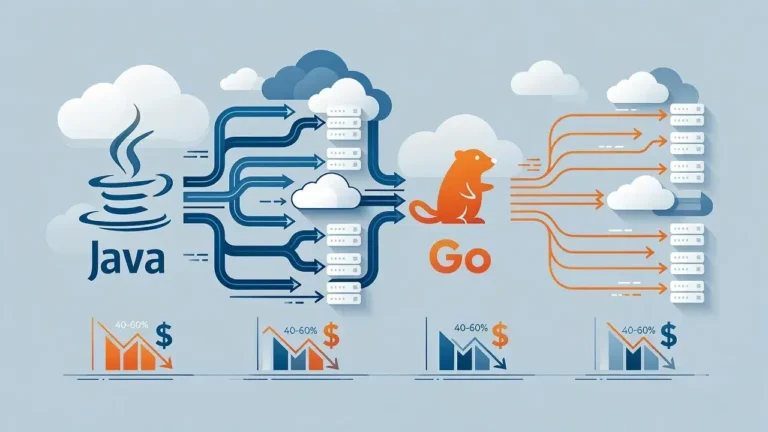
GraalVM native images compile Java applications into standalone executables that start instantly and consume significantly less memory, reducing cloud infrastructure costs by up to 60% while introducing deployment complexity through longer build times and framework compatibility challenges.
GraalVM native images cut my cloud bill by 60% but deployment got weird captures the reality many developers face when adopting this technology. The promise of dramatic cost savings attracts teams running microservices in cloud environments, yet the journey reveals unexpected obstacles that demand careful planning and architectural adjustments.
Why native images deliver massive cloud savings
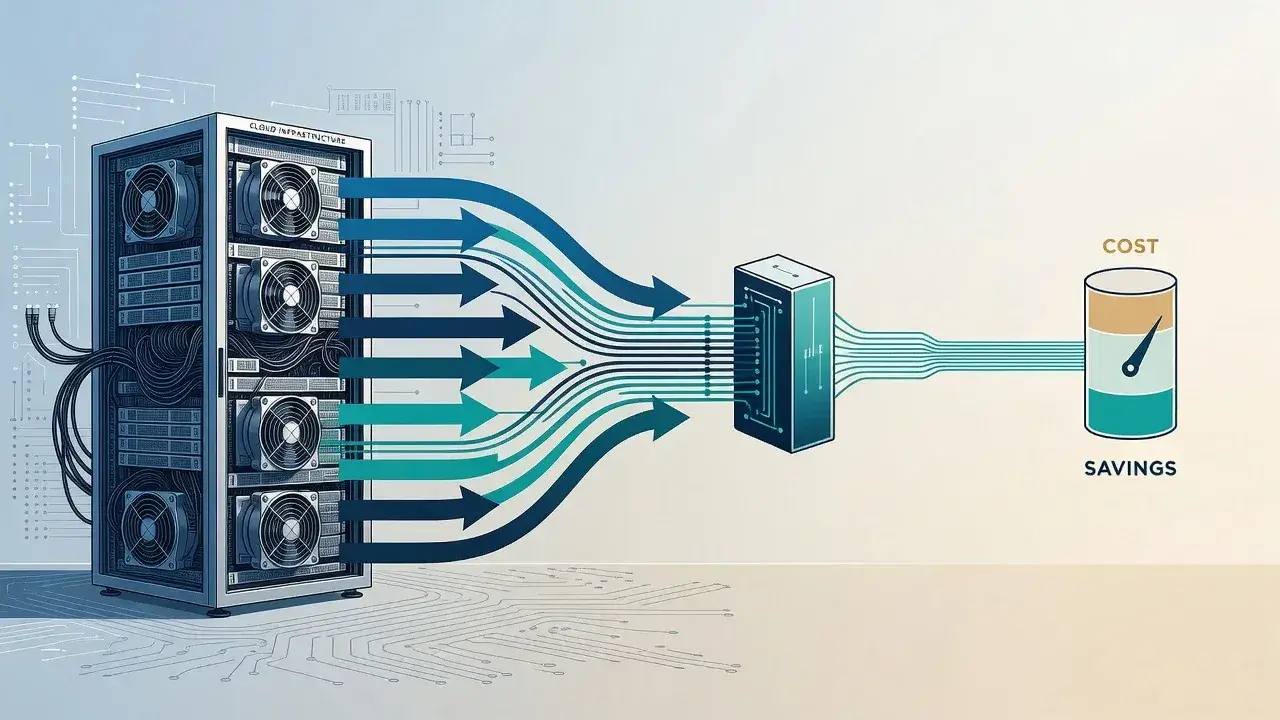
Traditional Java applications running on the JVM require substantial memory overhead and longer startup times. Cloud providers charge based on resource consumption, making memory-hungry applications expensive to scale.
Native images transform Java bytecode into machine code during compilation rather than runtime. This elimination of JVM overhead produces executables that start in milliseconds and occupy a fraction of the memory footprint.
- Memory consumption drops by 70-80% compared to JVM-based deployments
- Startup times reduce from seconds to under 100 milliseconds
- Smaller container images decrease storage and transfer costs
- Faster scaling enables efficient handling of traffic spikes
These improvements directly translate to lower cloud bills, particularly for serverless functions and containerized microservices that scale frequently throughout the day.
The deployment complexity nobody mentions upfront
While runtime performance improves dramatically, the build process becomes substantially more demanding. Compilation times extend from seconds to several minutes, sometimes exceeding ten minutes for complex applications.
Build pipeline challenges
CI/CD pipelines require significant adjustments to accommodate extended build durations. Development teams notice immediate impacts on their workflow efficiency and iteration speed.
- Build servers need more CPU and memory resources
- Feedback loops slow down during active development
- Container image builds consume considerably more time
- Local development environments struggle with resource demands
Organizations must balance the runtime savings against increased infrastructure costs for build environments and developer productivity impacts from slower feedback cycles.
Framework compatibility creates unexpected roadblocks
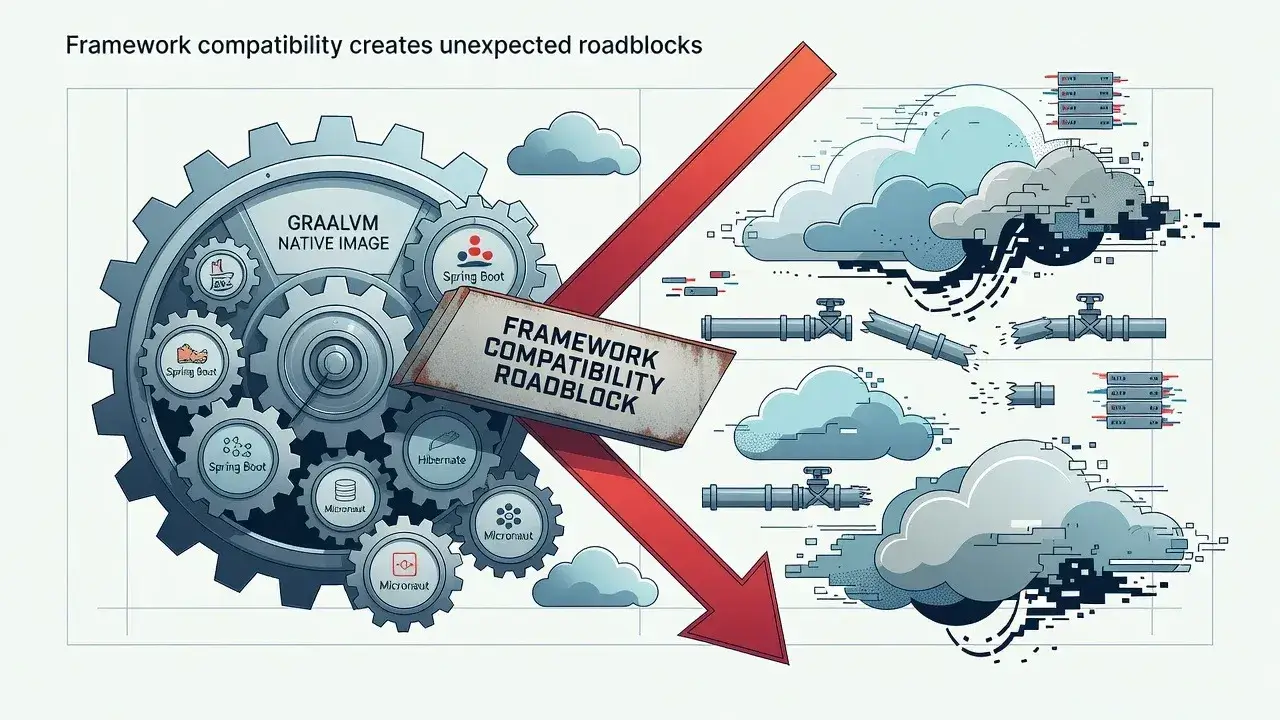
Not all Java frameworks and libraries work seamlessly with native image compilation. The closed-world assumption requires knowing all code paths at build time, creating friction with dynamic features.
Reflection, dynamic proxies, and classpath scanning require explicit configuration through reflection metadata files. Popular frameworks like Spring and Quarkus provide native image support, but third-party libraries often lack proper configuration.
Common compatibility issues
- Reflection-heavy libraries fail without manual configuration
- Dynamic class loading breaks in native executables
- Some serialization frameworks require workarounds
- JNI dependencies need careful handling
Teams discover these limitations during migration, forcing code refactoring or library replacements that weren't anticipated in initial planning.
Memory management behaves differently
Native images use a different garbage collector than the JVM, which affects application behavior under load. The SubstrateVM garbage collector prioritizes low latency over throughput.
Applications with specific memory patterns may experience unexpected performance characteristics. Tuning garbage collection requires learning new parameters and monitoring different metrics than traditional JVM deployments.
Understanding these behavioral differences prevents production surprises and ensures applications maintain expected performance levels under varying load conditions.
Debugging becomes more challenging
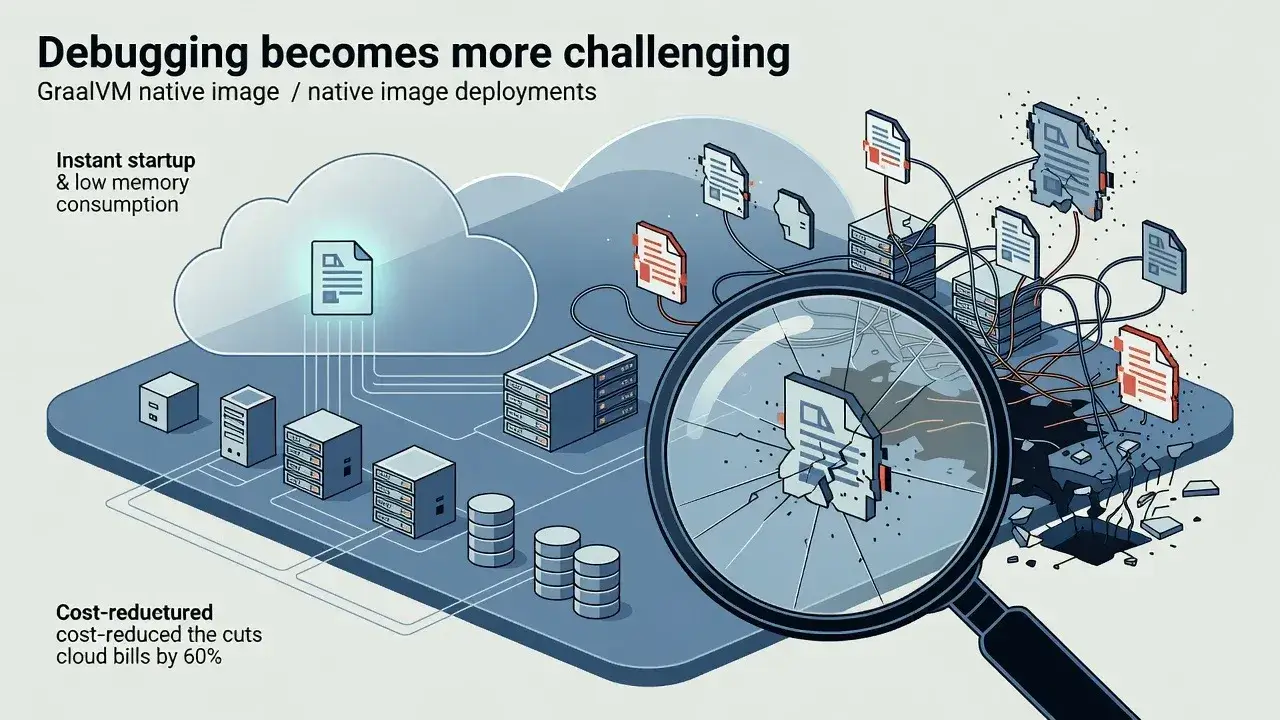
The debugging experience changes significantly with native images. Traditional Java debugging tools don't work with compiled executables, requiring developers to adapt their troubleshooting approaches.
Debugging limitations
Standard IDE debuggers cannot attach to native processes. GDB provides basic debugging capabilities, but the experience differs substantially from Java debugging tools developers know.
- Breakpoints work differently in compiled code
- Stack traces provide less context than JVM stack traces
- Remote debugging requires specialized setup
- Profiling tools need native-compatible alternatives
Development teams invest time learning new debugging workflows and establishing troubleshooting procedures that accommodate native image constraints.
When native images make financial sense
The 60% cost reduction isn't universal. Specific workload characteristics determine whether native images deliver meaningful savings or create unnecessary complexity.
Microservices with frequent scaling events benefit most from instant startup and reduced memory footprint. Serverless functions see dramatic improvements in cold start performance and execution costs.
Long-running applications with stable resource requirements may not justify the deployment complexity. Monolithic applications with extensive reflection usage face significant migration challenges that outweigh potential savings.
Calculating total cost of ownership requires considering build infrastructure, developer productivity, and operational complexity alongside runtime resource savings.
Practical strategies for successful adoption
Organizations achieving positive results follow incremental adoption patterns rather than wholesale migration. Starting with new microservices allows teams to build expertise without risking existing systems.
Implementation best practices
- Begin with stateless services that have minimal dependencies
- Establish comprehensive testing for native builds
- Document reflection configuration for team knowledge sharing
- Monitor build times and optimize CI/CD pipelines accordingly
Choosing frameworks with mature native image support reduces compatibility friction. Spring Native and Quarkus provide extensive documentation and tooling that simplifies the transition process.
Teams maintain parallel JVM builds during initial rollout, allowing quick rollback if native images cause unexpected issues in production environments.
Final thoughts on balancing costs and complexity
GraalVM native images deliver genuine infrastructure savings that significantly impact cloud spending for appropriate workloads. The 60% cost reduction represents real money returned to development budgets or business operations.
However, deployment complexity increases substantially, requiring teams to develop new skills and adjust established workflows. Success depends on realistic assessment of application characteristics, team capabilities, and willingness to invest in the transition process.
Organizations viewing native images as a strategic investment rather than a quick fix achieve better outcomes, building expertise gradually while capturing cost benefits where they matter most.