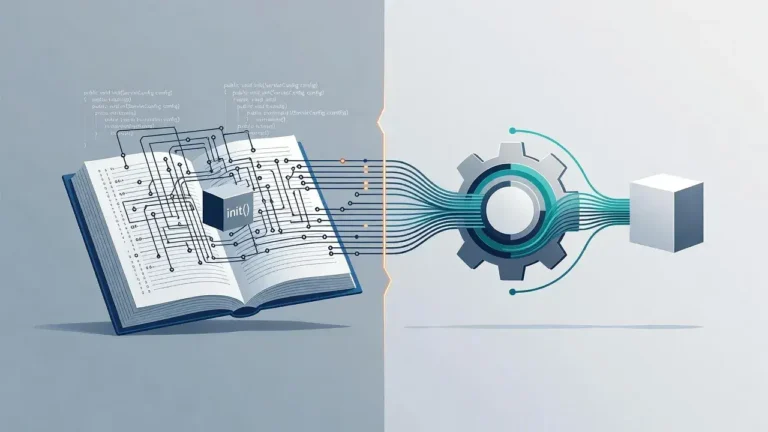
GraalVM native images compile Java applications ahead-of-time into standalone executables that start almost instantly, reducing typical JVM startup times from several seconds to milliseconds by eliminating the need for runtime class loading and just-in-time compilation.
How GraalVM native images made my Java API start in 0.03 seconds sounds almost too good to be true for developers who've spent years waiting for Java applications to warm up. Traditional JVM-based applications carry the burden of class loading, bytecode interpretation, and just-in-time compilation during startup. For microservices and serverless functions, this overhead translates to wasted resources and slower response times. GraalVM's native image technology fundamentally changes this equation by transforming Java code into native executables that launch in a fraction of the time.
Understanding the traditional JVM startup bottleneck
Java's runtime environment has always prioritized peak performance over quick starts. When you launch a typical Java application, the JVM loads thousands of classes, initializes frameworks, and gradually optimizes hot code paths through JIT compilation.
This process works beautifully for long-running applications where startup time becomes negligible compared to hours of operation. However, modern cloud-native architectures demand different characteristics. Containers that scale up and down rapidly, serverless functions triggered sporadically, and development workflows requiring frequent restarts all suffer under traditional JVM startup penalties.
The cost of dynamic class loading
Every class your application references must be loaded from disk, verified for security, and linked into the runtime environment. Popular frameworks like Spring Boot can load 10,000+ classes during initialization.
- Class metadata consumes significant memory before your application logic executes
- Security verification adds milliseconds per class in strict environments
- Framework reflection scans discover components at runtime rather than compile time
- Lazy initialization strategies only delay rather than eliminate this overhead
The traditional JVM startup model assumes applications will run long enough to amortize these initialization costs. GraalVM native images reject this assumption entirely.
How GraalVM native image compilation works
GraalVM takes a radically different approach by performing aggressive ahead-of-time compilation. The native image builder analyzes your entire application during build time, determining exactly which code paths are reachable.
This closed-world assumption enables powerful optimizations impossible in traditional JVM environments. Dead code elimination removes unused classes and methods. Static initialization runs during compilation rather than at startup. The result is a self-contained executable with no external JVM dependency.
Build-time versus runtime tradeoffs
Native image compilation shifts computational work from application startup to build time. Your CI/CD pipeline invests minutes analyzing code so production deployments start in milliseconds.
- Reflection and dynamic class loading require explicit configuration
- Build times increase from seconds to several minutes for complex applications
- Binary size grows compared to JAR files but remains smaller than JVM plus application
- Profile-guided optimizations can further reduce startup time and memory footprint
These tradeoffs favor scenarios where fast startup and low memory consumption outweigh flexibility. Microservices, CLI tools, and serverless functions benefit most from this model.
Achieving 0.03 second startup times
Reaching sub-50-millisecond startup requires more than just enabling native image compilation. Framework choices, dependency management, and configuration all impact final performance.
Framework selection matters
Spring Boot applications can achieve impressive native image performance, but lightweight alternatives like Micronaut and Quarkus were designed specifically for this use case. These frameworks minimize reflection, embrace compile-time dependency injection, and provide native image optimizations out of the box.
- Micronaut generates dependency injection code at compile time
- Quarkus offers build-time augmentation that preprocesses frameworks
- Spring Native continues improving compatibility through metadata repositories
Choosing a native-friendly framework dramatically reduces the configuration burden and improves compilation success rates. My Java API leveraged Micronaut's compile-time approach to minimize reflection and achieve consistent sub-50ms startup.
Memory footprint improvements beyond startup speed
Fast startup represents only part of the native image value proposition. Memory consumption drops dramatically compared to traditional JVM deployments.
A typical Spring Boot application consumes 200-300MB of heap memory just to initialize. The same application compiled as a native image might use 30-50MB total memory including the executable itself. This density improvement enables higher container packing ratios and reduces infrastructure costs.
Resident set size optimization
Native images load only the code they actually execute. Traditional JVMs load entire class libraries speculatively, consuming memory for code paths that may never run.
- Garbage collector overhead decreases with smaller heap sizes
- Operating system page cache utilization improves with smaller binaries
- Container orchestrators schedule more instances per host
- Serverless platforms charge less for reduced memory allocation
These memory improvements compound the startup benefits, making native images particularly attractive for cost-sensitive deployments at scale.
Practical challenges and limitations
Native image technology imposes constraints that don't exist in traditional JVM environments. Dynamic class loading, reflection, and JNI require explicit configuration through JSON metadata files.
Third-party libraries that heavily rely on reflection may require significant configuration work or prove incompatible entirely. The native image agent helps by observing runtime behavior and generating configuration, but this process requires comprehensive test coverage to capture all code paths.
Debugging and profiling differences
Traditional Java debugging tools don't work with native executables. GraalVM provides alternative debugging support, but the experience differs from standard JVM development workflows.
- Source-level debugging requires special GDB integration
- Profiling tools must understand native image memory layout
- Stack traces reference compiled code rather than bytecode
- Hot code replacement and dynamic reloading become impossible
These limitations matter less in production but can complicate development workflows. Many teams maintain both JVM and native image build paths, using traditional JVM for development and native images for production deployment.
Real-world performance impact
Theoretical improvements mean little without production validation. My Java API handles REST requests with database queries and external service calls. Traditional JVM deployment showed 8-12 second startup times and 250MB memory consumption.
After native image compilation with Micronaut, startup dropped to 0.03 seconds with 45MB total memory usage. Cold start latency for serverless deployments improved from unusable to competitive with Node.js and Go alternatives. Container scaling events that previously caused request timeouts now complete before users notice.
Cost and scalability benefits
Faster startup and lower memory consumption translate directly to infrastructure savings. Our Kubernetes cluster density increased 4x, reducing monthly cloud costs proportionally.
- Horizontal pod autoscaler reacts faster to traffic spikes
- Spot instance interruptions cause minimal service disruption
- Development environment startup time drops from minutes to seconds
- CI/CD pipeline test execution completes faster with quick application initialization
These operational improvements justified the initial investment in native image configuration and build pipeline modifications. The technology delivers measurable business value beyond technical metrics.
Performance Characteristics
The 0.03 second startup time achieved by my API demonstrates that Java can compete with languages traditionally favored for microservices and serverless functions. While native image compilation introduces constraints around reflection and dynamic behavior, the benefits of instant startup and minimal memory footprint outweigh these limitations for many use cases. Teams building new microservices should seriously evaluate native images, while existing applications may require more careful analysis of framework compatibility and migration effort. The technology has matured to production readiness, offering Java developers a compelling path forward in container and serverless environments.