Java 21 introduces virtual threads, pattern matching enhancements, and sequenced collections that fundamentally reshape how developers approach concurrency, data handling, and API design, rendering traditional patterns like complex thread pooling and verbose instanceof chains outdated.
What changed in Java 21 that makes old API patterns obsolete now is a question many developers in Brasil and worldwide are asking as they evaluate whether to migrate their codebases. Java 21 arrived as a long-term support release packed with features that don't just add convenience—they challenge the very foundations of how we've been writing Java code for years. If you're still relying on patterns from the Java 8 era, understanding these shifts isn't optional anymore.
Virtual threads transform concurrency models
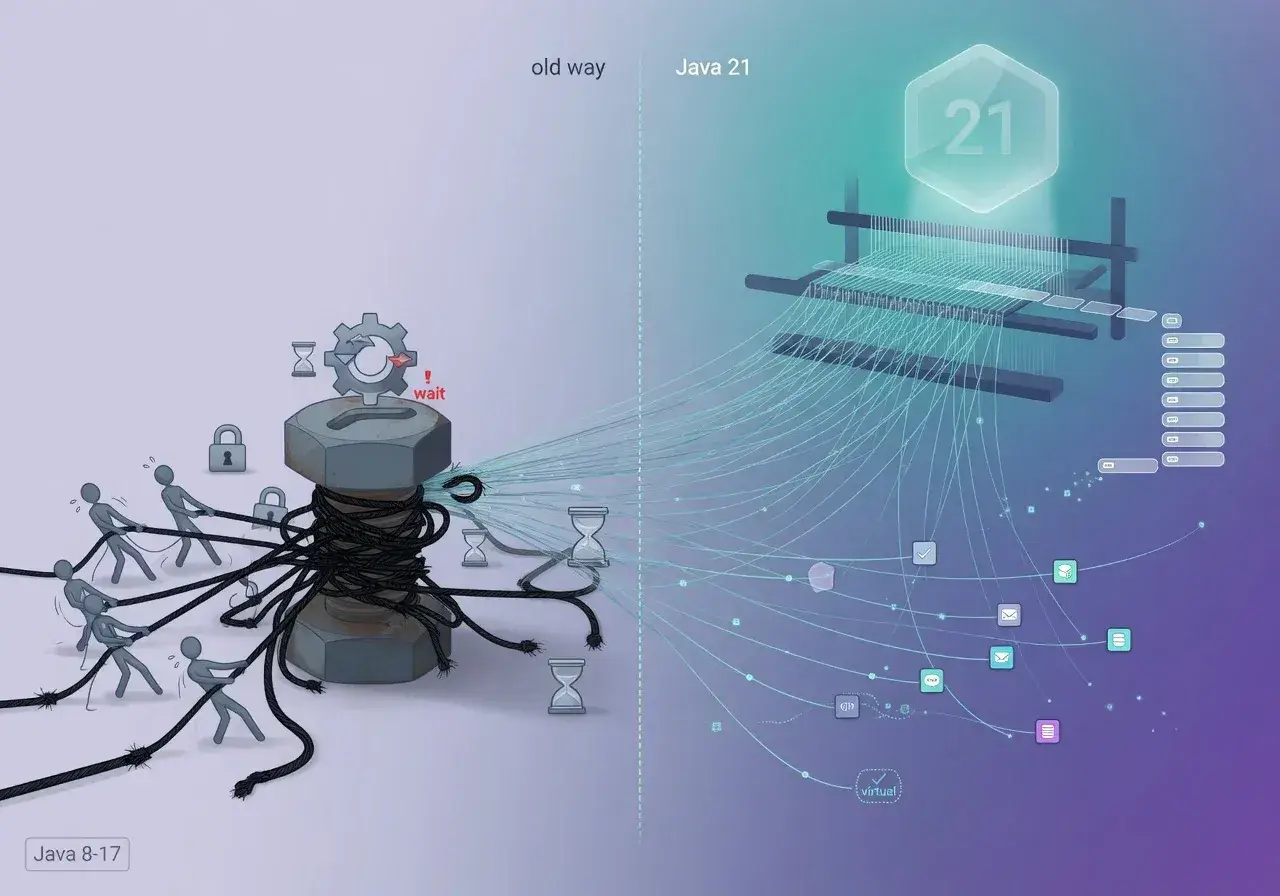
The introduction of virtual threads through Project Loom represents the most significant shift in Java's concurrency story since the original threading model. Traditional thread-per-request patterns required careful management of thread pools, complex executors, and constant worry about blocking operations.
Why thread pools became less critical
Virtual threads are lightweight and managed by the JVM rather than the operating system. This fundamental change means you can create millions of virtual threads without the overhead that plagued platform threads. The old pattern of carefully tuning thread pool sizes becomes largely unnecessary.
- Virtual threads cost only a few hundred bytes compared to megabytes for platform threads
- Blocking operations no longer waste expensive resources
- Code becomes simpler and more maintainable without complex async patterns
- Traditional ExecutorService configurations need complete rethinking
Applications that once relied on reactive programming frameworks solely for scalability can now achieve similar throughput with straightforward synchronous code. This shift makes virtual threads one of the most disruptive features, obsoleting entire architectural patterns built around working within platform thread limitations.
Pattern matching eliminates verbose type checking
Java 21 finalizes pattern matching for switch expressions and introduces record patterns, fundamentally changing how developers handle type checking and data extraction. The old instanceof-cast-check pattern that cluttered codebases for decades finally has a modern replacement.
Before Java 21, checking types and extracting data required multiple lines of boilerplate code. Now, pattern matching combines type checking, casting, and variable binding in a single, readable expression. This enhancement extends to sealed classes, allowing exhaustive pattern matching that the compiler can verify.
Record patterns simplify data extraction
- Nested pattern matching eliminates layers of conditional logic
- Compiler verification catches missing cases in sealed hierarchies
- Code reads more like declarative specifications than imperative instructions
APIs designed around visitor patterns or complex type hierarchies can now be simplified dramatically. The combination of sealed classes, records, and pattern matching creates a powerful alternative to traditional object-oriented design patterns that relied heavily on polymorphism and double dispatch.
Sequenced collections fix ordering inconsistencies
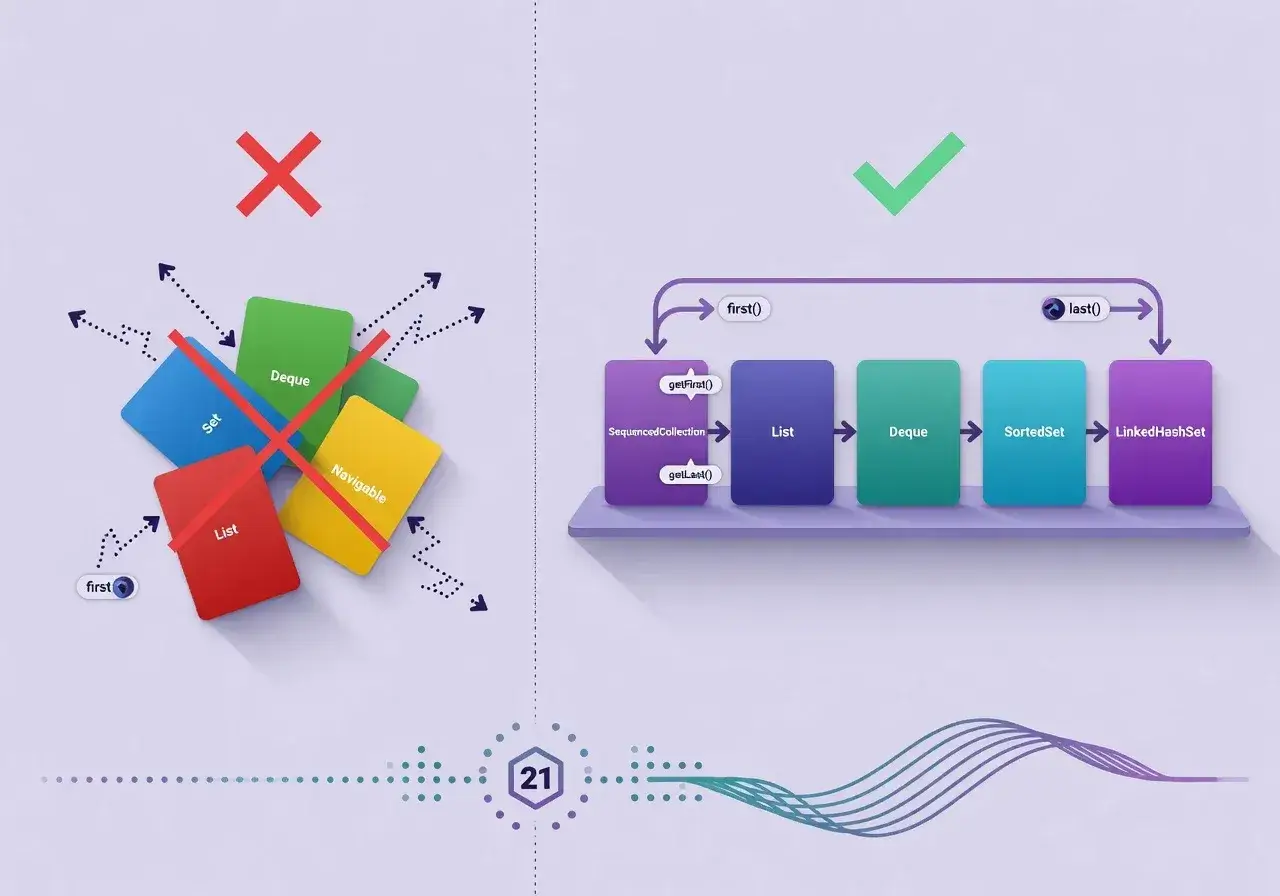
Java 21 introduces sequenced collections interfaces that address a long-standing API inconsistency. Lists, Deques, and SortedSets all maintain element order, yet they lacked a common interface expressing this shared characteristic.
The new SequencedCollection, SequencedSet, and SequencedMap interfaces provide uniform methods for accessing first and last elements, and for obtaining reversed views. This seemingly small addition makes old patterns for handling ordered collections feel clunky and outdated.
Unified API for ordered access
Methods like getFirst(), getLast(), and reversed() work consistently across different collection types. Code that previously required type-specific logic or custom utility methods can now use standard interfaces.
- Reversed views are efficient and don't create defensive copies
- Code becomes more generic and reusable across collection types
- Edge case handling for empty collections is standardized
Libraries and frameworks that built their own abstractions around ordered collections now have less justification for custom implementations. The standard library finally provides what developers have needed for years.
String templates enhance code safety
While still in preview, string templates represent Java's answer to the security and readability problems of traditional string concatenation and formatting. This feature makes old patterns using StringBuilder chains or String.format() look dated.
String templates provide compile-time validation and type safety that string concatenation never could. They help prevent injection vulnerabilities by clearly separating code from data, making security issues more visible during code review.
Structured concurrency improves error handling
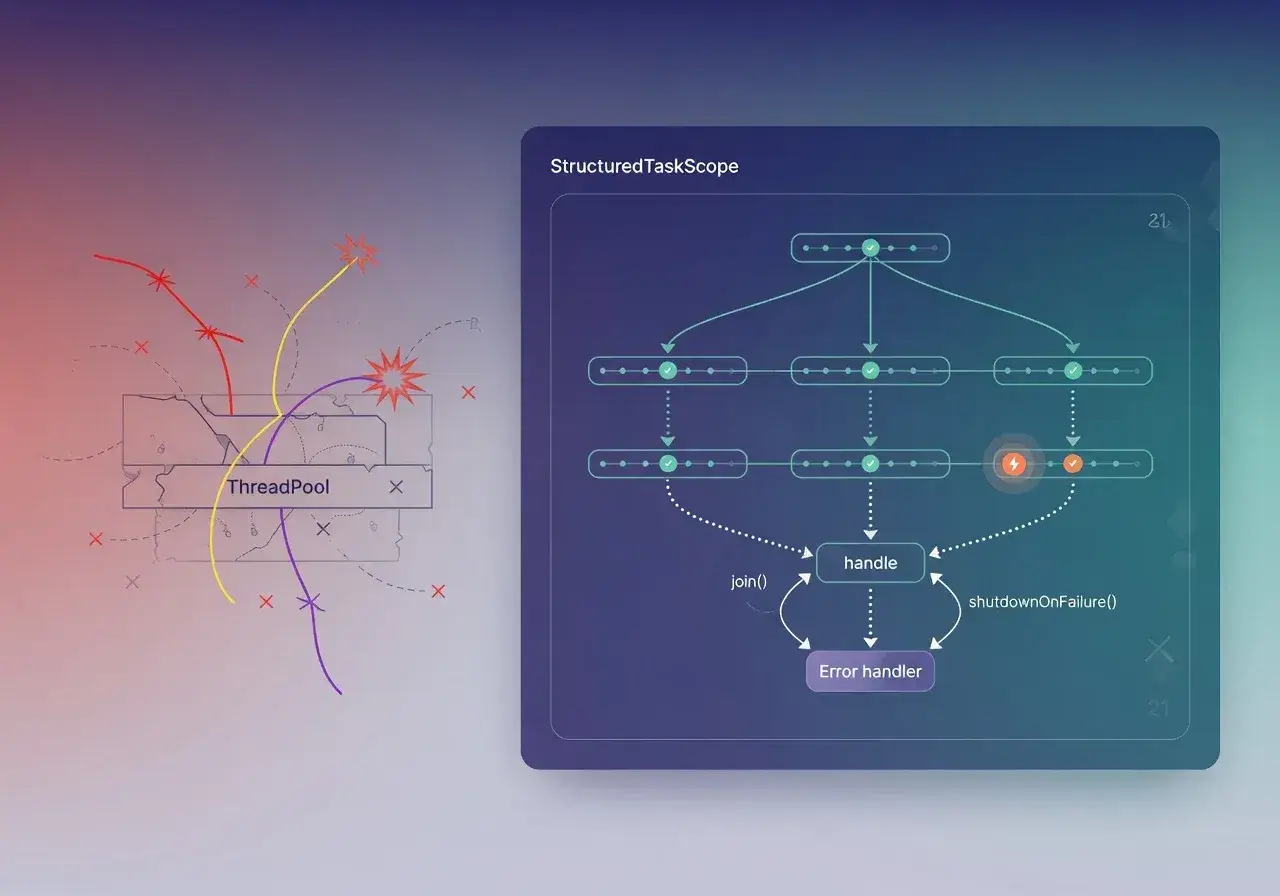
Structured concurrency, another preview feature in Java 21, provides a framework for managing multiple concurrent tasks as a single unit of work. This approach makes traditional fork-join patterns and manual CompletableFuture orchestration feel primitive.
The StructuredTaskScope API ensures that parent tasks don't complete until all child tasks finish, and it propagates failures correctly. This structure eliminates common bugs where exceptions get lost or resources leak because cleanup code never runs.
Simplified concurrent operations
- Automatic cancellation of sibling tasks when one fails
- Clear ownership and lifecycle management for concurrent operations
- Better debugging with coherent stack traces
- Resource cleanup happens reliably even during failures
Code that spawns multiple threads to perform parallel work becomes dramatically simpler and more reliable. The old pattern of manually tracking futures and handling partial failures across multiple try-catch blocks gives way to declarative scope management.
Migration considerations for existing code
Understanding what changed doesn't automatically mean rewriting everything. Legacy patterns still work, but new code should embrace Java 21 idioms where they provide clear benefits. The transition requires evaluating each pattern's role in your architecture.
Virtual threads offer the most immediate impact for I/O-bound applications. Pattern matching improves code dealing with complex type hierarchies. Sequenced collections help anywhere you work with ordered data. Prioritize changes based on where your codebase experiences the most pain with current patterns.
Practical migration steps
- Start with new features rather than rewriting stable code
- Focus on areas where old patterns cause maintenance problems
- Test thoroughly since behavior changes can be subtle
Teams should establish coding standards that guide when to use new features versus maintaining consistency with existing code. The goal is gradual improvement, not disruptive rewrites that introduce risk without proportional benefit.
Embracing modern Java idioms
Java 21 doesn't just add features—it challenges developers to rethink fundamental patterns that shaped Java development for decades. Virtual threads eliminate the need for complex async patterns, pattern matching replaces verbose type checking, and sequenced collections provide long-missing consistency. These changes make many traditional API patterns feel obsolete, not because they stop working, but because better alternatives now exist. Developers who embrace these new idioms will write code that's simpler, safer, and more maintainable than what was possible before.