Java continues dominating enterprise web applications in 2026 because its mature ecosystem, superior performance under heavy loads, robust threading model, and extensive enterprise tooling provide reliability and scalability that Node.js struggles to match in mission-critical business environments.
Why modern Java web apps still crush Node in 2026 for enterprise workloads remains a pressing question for CTOs and engineering teams across Brasil and globally. While Node.js gained popularity for its speed in building lightweight applications, Java's proven track record in handling complex, high-stakes systems keeps it firmly positioned as the enterprise standard. Understanding these differences helps organizations make smarter technology investments.
The performance gap under real enterprise pressure

Enterprise applications face demands that differ dramatically from consumer-facing apps. When thousands of concurrent users access complex business logic simultaneously, architectural choices matter significantly.
How Java handles concurrent processing
Java's multithreading capabilities allow applications to process multiple requests truly in parallel across CPU cores. The JVM optimizes thread management automatically, distributing workloads efficiently without developer intervention.
- Native thread pools manage thousands of concurrent connections without performance degradation
- Just-in-time compilation optimizes hot code paths during runtime
- Garbage collection algorithms minimize pause times in production environments
- Virtual threads in Java 21 further reduce resource overhead for blocking operations
Node.js operates on a single-threaded event loop, which works beautifully for I/O-bound tasks but creates bottlenecks when CPU-intensive operations enter the picture. Enterprise workloads frequently involve complex calculations, data transformations, and business rule processing that consume significant CPU cycles.
Enterprise tooling and framework maturity
The depth of Java's enterprise ecosystem provides solutions for virtually every business requirement without reinventing wheels.
Spring Boot has evolved into a comprehensive platform covering security, data access, messaging, batch processing, and microservices orchestration. Organizations find production-ready components for authentication, authorization, transaction management, and distributed caching built directly into the framework. Netflix, LinkedIn, and major financial institutions rely on these battle-tested tools daily.
Node.js frameworks like Express remain lightweight and flexible but require assembling multiple third-party libraries to achieve similar enterprise functionality. This fragmentation introduces maintenance challenges and potential security vulnerabilities across numerous dependencies.
Long-term maintenance and code stability

Enterprise applications typically run for decades, not months. The stability of the underlying platform directly impacts total cost of ownership.
Java's backward compatibility advantage
Oracle and the Java community prioritize backward compatibility rigorously. Applications written for Java 8 still run on Java 21 with minimal modifications. This stability protects technology investments and reduces migration risks.
- Predictable release cycles with long-term support versions
- Extensive documentation maintained across multiple versions
- Large talent pool familiar with established patterns
The Node.js ecosystem moves rapidly, with frequent breaking changes across major versions. Packages deprecate quickly, and maintaining older applications often requires significant refactoring efforts. For enterprises managing hundreds of internal applications, this velocity creates operational burden.
Security and compliance requirements
Regulated industries face strict security audits and compliance mandates that influence technology selection.
Java provides robust security managers, fine-grained access controls, and extensive cryptography libraries meeting government and industry standards. The platform undergoes rigorous security reviews, with vulnerabilities patched through well-established channels. Major compliance frameworks explicitly reference Java security capabilities in their technical requirements.
Node.js security depends heavily on npm package quality, which varies dramatically. Supply chain attacks targeting popular packages have increased, creating audit nightmares for security teams. Enterprises must implement additional scanning and validation processes to maintain acceptable risk levels.
Developer productivity at enterprise scale

While Node.js champions rapid prototyping, Java excels when teams grow and codebases expand.
Static typing prevents entire bug categories
Java's static type system catches errors during compilation rather than runtime. This becomes invaluable when multiple teams work on interconnected services across an organization.
IDEs like IntelliJ provide exceptional refactoring capabilities, auto-completion, and code navigation that dramatically improve developer efficiency in large codebases. These tools leverage type information to offer suggestions impossible in dynamically typed languages.
TypeScript attempts addressing JavaScript's type limitations, but the type system remains optional and less rigorous than Java's compile-time guarantees. Large enterprises consistently report fewer production incidents with strongly typed languages.
Cloud infrastructure and containerization
Modern deployment practices favor containerized applications, where startup time and resource consumption matter significantly.
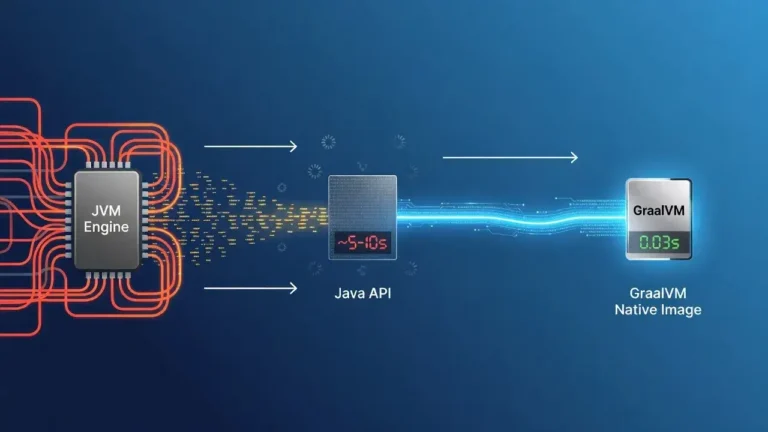
Recent Java innovations like GraalVM native images and optimized container base images have dramatically reduced memory footprints and startup times. Spring Boot 3 applications now start in milliseconds when compiled natively, competing directly with Node.js on metrics where JavaScript previously held advantages.
Kubernetes operators and cloud-native tooling provide first-class support for Java applications, reflecting the language's dominance in enterprise cloud migrations. Major cloud providers optimize their platforms specifically for JVM workloads.
The cost equation for enterprise decisions
Technology choices ultimately impact bottom lines through development costs, infrastructure expenses, and operational overhead.
Java's efficiency under load translates to fewer servers handling equivalent traffic compared to Node.js deployments. When applications serve millions of requests daily, these infrastructure savings compound significantly. Additionally, the extensive standard library and enterprise frameworks reduce custom development time for common business requirements.
Organizations also consider hiring markets. Java developers remain abundant globally, with established career paths and training programs. While Node.js developers are available, the pool shrinks when seeking expertise in enterprise patterns and distributed systems architecture.
Choosing the right tool for enterprise reality
Node.js serves specific use cases exceptionally well, particularly real-time applications and lightweight APIs. However, enterprise workloads demand characteristics where Java consistently delivers superior results. The combination of performance under pressure, ecosystem maturity, long-term stability, and comprehensive tooling makes Java the pragmatic choice for organizations building systems that must operate reliably for years while supporting business growth and evolving requirements.