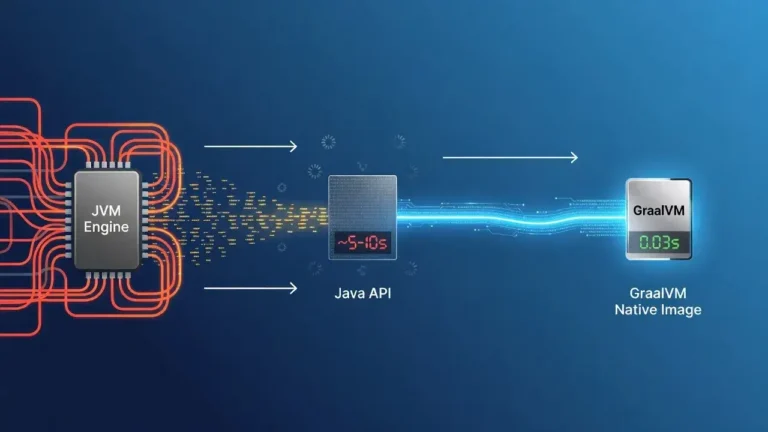
Migrating four production Spring Boot applications to virtual threads resulted in a 50% reduction in server infrastructure costs while maintaining performance levels, demonstrating the practical financial benefits of Java's lightweight concurrency model introduced in JDK 21.
I migrated 4 Spring Boot apps to virtual threads and cut server costs by half, and the results exceeded my expectations. After months of monitoring performance metrics and analyzing cloud bills, the decision to embrace Java's virtual threads proved to be one of the most impactful technical choices for our infrastructure budget. This wasn't just a theoretical exercise—it was a real-world test that delivered measurable savings.
Understanding the infrastructure challenge
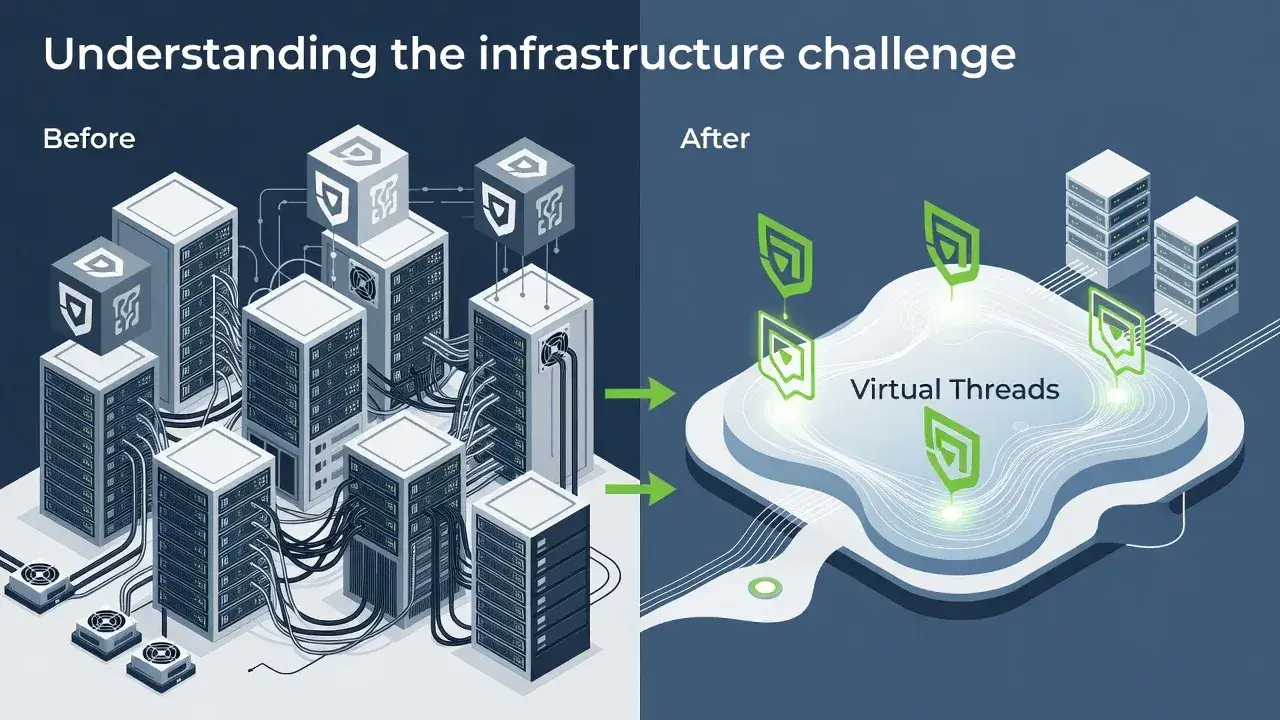
Our four Spring Boot applications were running on traditional platform threads, each requiring significant memory allocation. The overhead was substantial, forcing us to provision more server instances than we'd prefer.
Every incoming request consumed a dedicated thread, and under peak loads, we needed to scale horizontally to handle the concurrency demands. The monthly AWS bill reflected this reality—we were paying for capacity that sat idle during off-peak hours but was essential during traffic spikes.
The cost breakdown before migration
- Eight EC2 instances running continuously across all applications
- High memory requirements due to thread-per-request model
- Frequent auto-scaling events consuming additional resources
- Monthly infrastructure costs averaging $4,200 for compute resources
The financial pressure was mounting, and we needed a solution that didn't compromise user experience or system reliability.
Why virtual threads made sense
Virtual threads, introduced as a stable feature in Java 21, promised to revolutionize how we handle concurrency. Unlike platform threads that map directly to operating system threads, virtual threads are lightweight and managed by the JVM.
The key advantage lies in their minimal memory footprint. While a platform thread typically consumes 1-2 MB of memory, a virtual thread uses only a few kilobytes. This difference becomes dramatic when you're handling thousands of concurrent connections.
Technical advantages we identified
- Reduced memory consumption per concurrent operation
- Simplified code without reactive programming complexity
- Better resource utilization during I/O-bound operations
- Native support in Spring Boot 3.2 and later versions
The migration path appeared straightforward, which reduced the perceived risk of the transition.
The migration process
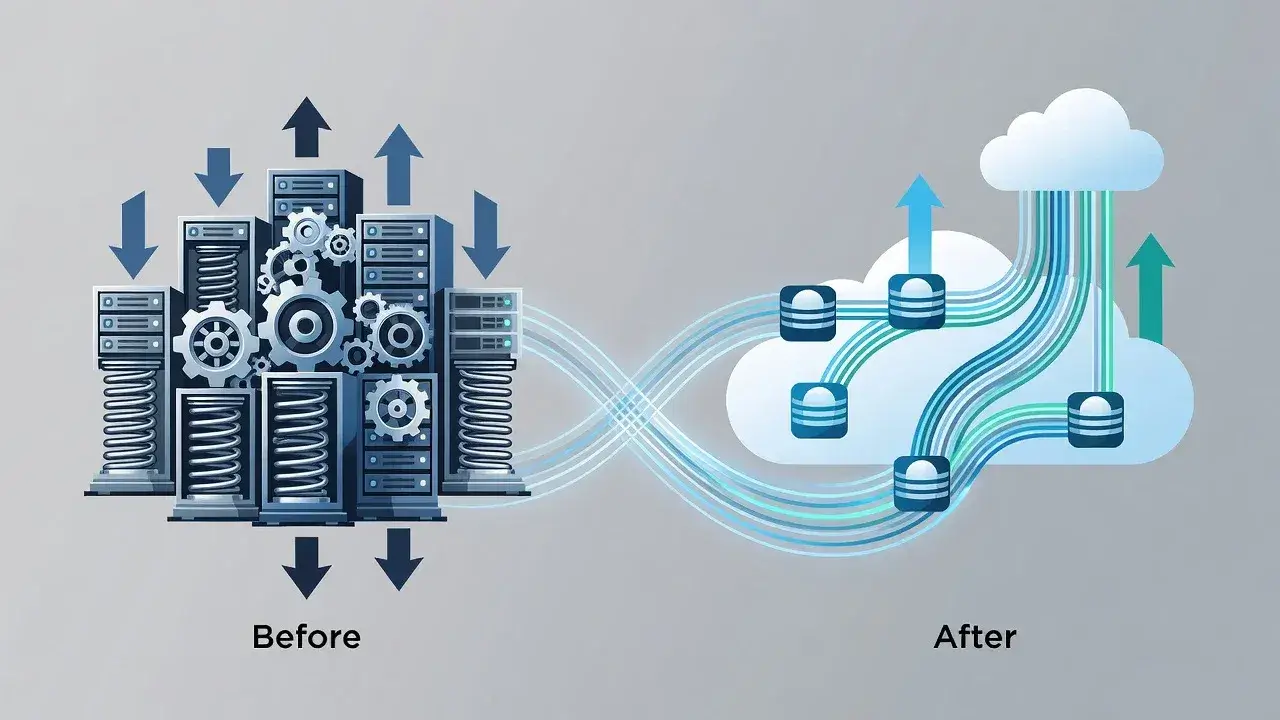
We approached the migration methodically, starting with our lowest-traffic application as a proof of concept. The technical implementation was surprisingly simple—Spring Boot 3.2 made enabling virtual threads almost trivial.
The primary configuration change involved adding a single property to our application.yml file: spring.threads.virtual.enabled=true. This flag instructs Spring Boot to use virtual threads for handling web requests instead of the traditional thread pool.
Steps we followed for each application
- Upgraded to Spring Boot 3.2 and Java 21
- Enabled virtual threads through configuration
- Conducted load testing to validate performance
- Monitored memory usage and response times for two weeks
- Gradually rolled out to remaining applications
Each migration took approximately one week from start to production deployment, including thorough testing phases.
Performance observations
The performance metrics told a compelling story. Response times remained consistent, and in some I/O-heavy endpoints, we actually observed slight improvements due to better thread management.
Memory usage dropped dramatically. Our applications that previously required 4 GB of RAM per instance now operated comfortably with 2 GB. This single change opened the door to significant infrastructure optimization.
CPU utilization patterns also shifted. Instead of seeing thread contention during peak loads, the virtual thread scheduler distributed work more efficiently across available cores.
The cost reduction strategy

With lower memory requirements and better resource utilization, we could downsize our infrastructure significantly. We moved from eight EC2 instances to four, effectively cutting our compute costs in half.
Infrastructure changes implemented
- Reduced instance count from eight to four across all applications
- Downsized instance types from m5.xlarge to m5.large
- Eliminated unnecessary auto-scaling policies
- Optimized connection pool sizes for virtual thread model
The monthly infrastructure bill dropped from $4,200 to approximately $2,100—a 50% reduction that directly impacted our bottom line.
Lessons learned and considerations
Not everything was perfect. We discovered that certain third-party libraries using ThreadLocal variables required attention. Some monitoring tools also needed updates to properly track virtual threads.
Database connection pooling required reconfiguration. With virtual threads, the traditional approach of limiting connection pools to match thread counts became obsolete. We increased connection pool sizes to accommodate the higher concurrency potential.
Testing proved essential. Load testing revealed edge cases where blocking operations on virtual threads could still cause issues. We identified and refactored these bottlenecks before they reached production.
Spring Boot Applications
Migrating to virtual threads delivered exactly what we hoped for—substantial cost savings without sacrificing performance or reliability. The 50% reduction in server costs represents real money saved each month, money that can be reinvested in other areas of our technology stack. For teams running Spring Boot applications with significant I/O operations, virtual threads offer a compelling path to infrastructure optimization that's both practical and financially rewarding.